I know the World Series of Baseball starts today, but seeing as no teams from Gotham City are participating, I find it hard to focus on the sport. Especially since there are such exciting events going on in the world of my alter ego, The Batman. Yes, it's true, the bat is out of the bag: the blogger you all knew as Pankin is, in fact, the true caped crusader, protecting the innocent citizens from nefarious villains that threaten the very fabric of our society. I couldn't hold in the truth any longer ever since the release of a highly anticipated video game chronicling my latest adventures through that maze of sin and death known as Arkham City.
The folks at Rocksteady Games did such a great job of portraying me and my adventures through Arkham Asylum two years ago that I graciously extended them the license for using my likeness and personal history a second time. They took a little liberty with the character design (notice the discrepancy between the REAL Batman (me, right) and a ludicrously exaggerated statue of the version of "Batman" used in the game (left)). But the replication of my patented fighting style, the use of the gadgets included in my utility belt, and the choice of actor to impersonate my voice (Kevin Conroy from the Animated Series) are all second to none.
What follows is a series of excerpts from my personal case files that were compiled during the actual adventures upon which Batman: Arkham City is based. As you may know, I'm not in the habit of publishing my own personal notes, preferring to filter them through various channels such as comic books, television shows, and feature films. But based on the hype surrounding the release of this game, I figure I'd make an exception.
Please enjoy the outpourings of my expert detective's intellect as I take you through a harrowing journey into the heart of.... ARKHAM CITY!
Fair warning: SPOILERS WILL FOLLOW!
Part 1: Opening Sequence
My two most ardent passions brought together under the roof of one blog!
Wednesday, October 19, 2011
Sunday, October 16, 2011
Projections vs. Reality: St. Louis Cardinals
Just under the wire with a post about the Cardinals again, as they could be one win away tonight from knocking the Brewers out of the postseason and reaching the World Series for the first time since 2006. I personally hope the Brewers win two at home to advance, partly because I like the Brewers, but partly because it would be too much of an underdog story to have a team projected to finish 4th in the division play in the Fall Classic. However, the first comment the scout makes in "Enemy Lines" is that you can never count this team out because of their pitching staff and Manager Tony LaRussa's impeccable ability to strategically run his bullpen in the ground.
The next comment is that "there's nothing not to like about Chris Carpenter." Well obviously this scout never consulted the Brewers - who have their own set of issues with the hurler - or examined Carp's injury history, which caused him to miss two of the past five seasons. Keep in mind, their plan was to have Carpenter as the #2 starter behind Adam Wainwright, before the latter went down for the year with Tommy John surgery. The scout praises replacement Kyle McClellan's curveball, which nevertheless wasn't enough to keep him in the rotation for the full year. He also claimed
The scout also comments on Albert Pujols' apparent lack of focus throughout the spring. Perhaps the looming promise of free agency and the potential of a $30m a year contract distracted him a bit. This distraction apparently continued to the regular season, as 2011 was the first time in his 11 year career that Pujols failed to hit .300 or reach 100 RBI (he missed both by 1). Another thing the scout got right was that the Cardinals would not be happy with Ryan Theriot's defense - he cost his team between 8 and 12 runs with his glove at SS... but was anywhere from 3 to 6 runs above average at 2B (where he moved after the acquisition of Rafael Furcal).
One mis-judgment by the scout was that "Colby Rasmus is way too good a player to trade" - tell that to the Toronto Blue Jays, who acquired the potential star centerfielder in a blockbuster trade. I don't think the scout writes the "Modest Proposal" section, but that includes another mis-judgment: play Allen Craig in RF over newcoming veteran Lance Berkman. Tell that to his 31 HR, .959 OPS, and 5.2 WAR. (That WAR includes 5.9 offensively and -0.7 on defense, as he's definitely better suited as a 1B/DH type.) Craig played well in 75 games (2.1 WAR), and was better in the field (1 to 8 runs saved), but even when they needed another outfielder, the Redbirds went with Jon Jay (1.3 WAR) more often than not, so they must think less highly of Craig than the editors of SI.
"The Number" is 10 blown saves by the 2010 Cardinals' bullpen, "the fewest in the NL since 2004." All that changed in 2011, where the team blew 26 late-inning leads. Ryan Franklin (he of the 93.1% success rate last year) blew 4 of his 5 chances, and was promptly replaced by youngster Fernando Salas (and later in the playoffs by Jason Motte, who doesn't even figure as the ONE non-closer reliever in the SI preview. That spot goes to Mitchell Boggs, who was good, but didn't figure nearly as much into the team's bullpen. This is one grievance I have with the SI Baseball preview: the bullpen is such a big part of a team's strategy and success, and they leave room for a closer and ONE other reliever? When the football preview leaves room for the entire defense and offensive line? Where's the respect to America's true pastime. OK rant over. Enjoy the NLCS tonight...).
The next comment is that "there's nothing not to like about Chris Carpenter." Well obviously this scout never consulted the Brewers - who have their own set of issues with the hurler - or examined Carp's injury history, which caused him to miss two of the past five seasons. Keep in mind, their plan was to have Carpenter as the #2 starter behind Adam Wainwright, before the latter went down for the year with Tommy John surgery. The scout praises replacement Kyle McClellan's curveball, which nevertheless wasn't enough to keep him in the rotation for the full year. He also claimed
The scout also comments on Albert Pujols' apparent lack of focus throughout the spring. Perhaps the looming promise of free agency and the potential of a $30m a year contract distracted him a bit. This distraction apparently continued to the regular season, as 2011 was the first time in his 11 year career that Pujols failed to hit .300 or reach 100 RBI (he missed both by 1). Another thing the scout got right was that the Cardinals would not be happy with Ryan Theriot's defense - he cost his team between 8 and 12 runs with his glove at SS... but was anywhere from 3 to 6 runs above average at 2B (where he moved after the acquisition of Rafael Furcal).
One mis-judgment by the scout was that "Colby Rasmus is way too good a player to trade" - tell that to the Toronto Blue Jays, who acquired the potential star centerfielder in a blockbuster trade. I don't think the scout writes the "Modest Proposal" section, but that includes another mis-judgment: play Allen Craig in RF over newcoming veteran Lance Berkman. Tell that to his 31 HR, .959 OPS, and 5.2 WAR. (That WAR includes 5.9 offensively and -0.7 on defense, as he's definitely better suited as a 1B/DH type.) Craig played well in 75 games (2.1 WAR), and was better in the field (1 to 8 runs saved), but even when they needed another outfielder, the Redbirds went with Jon Jay (1.3 WAR) more often than not, so they must think less highly of Craig than the editors of SI.
"The Number" is 10 blown saves by the 2010 Cardinals' bullpen, "the fewest in the NL since 2004." All that changed in 2011, where the team blew 26 late-inning leads. Ryan Franklin (he of the 93.1% success rate last year) blew 4 of his 5 chances, and was promptly replaced by youngster Fernando Salas (and later in the playoffs by Jason Motte, who doesn't even figure as the ONE non-closer reliever in the SI preview. That spot goes to Mitchell Boggs, who was good, but didn't figure nearly as much into the team's bullpen. This is one grievance I have with the SI Baseball preview: the bullpen is such a big part of a team's strategy and success, and they leave room for a closer and ONE other reliever? When the football preview leaves room for the entire defense and offensive line? Where's the respect to America's true pastime. OK rant over. Enjoy the NLCS tonight...).
Thursday, October 13, 2011
Projections vs. Reality: Milwaukee Brewers
Let me just say right off, that as soon as it became apparent that the Brewers would make the playoffs, they were my pick to win the World Series (against the Rays, but let's not get into that...). I wasn't sure how they would get past the Phillies, but thankfully they didn't have to. But after falling behind 2 games to 1 against the Cardinals, they still have their work cut out for them. Their run is even more impressive seeing as they were projected to finish 2nd in the division behind the Cincinnati Reds.
Not to rag on the scout in the "Enemy Lines" section, but he got two things noticeably wrong. The first involves the pitching staff: "With Zack Greinke out ... they're scrambling." Well, as it happened, Greinke compiled just the fourth-highest pitching WAR (Wins Above Replacement) among Brewers starters. And even though he missed five starts due to an injury, his pitching WAR per start is still fourth on the team. Here's how the numbers shake out with Milwaukee's entire starting staff (the same as projected by SI, by the way):
The second thing the scout got wrong had to do with starting third baseman Casey McGehee, who the projected lineup has him batting fifth, behind the inspiration for Beast Mode: "He can protect Fielder." McGehee could have done so with numbers resembling last year's 23 HR, 104 RBI, and 3.0 WAR. However McGehee played so poorly in 2011 that he actually recorded one win below replacement (-1.0 WAR), the lowest of any Brewers player. Kudos to manager Ron Roenicke for trusting the numbers and going with Jerry Hairston at 3B for the playoffs. Below is a graphic illustrating the drastic decline in production:
Speaking of trusting the numbers, the "Modest Proposal" section refers to a sabermetric theory that a team's worst batter (i.e. the pitcher, for National League clubs) should bat 8th in the order instead of 9th. That way you have the top of the order coming up with men on base more often, or something like that. Be that as it may, Roenicke trotted out a batting order with the pitcher batting 9th for all 162 of the Brewers' games this year. "The Number" emphasizes the lack of baserunning speed by powerhouse first baseman Prince Fielder, claiming that he only went from 1st to 3rd on a single ONCE last year. The baseball-reference stats pages lump 1st-to-3rd and 1st-to-home scenarios together - they have Fielder with a "3" in that column. That number increased to "8" in 2011, so maybe he increased his running drills in the off-season or learned to pick up the ball flight better. Either way, he definitely still knows how to hit:
Pretty much the only discrepancy between the projected lineup and reality is that newcomer Nyjer Morgan started the majority of games in CF rather than Carlos Gomez, who served more of a defensive replacement role. Also the batting order was rejiggered a little towards the end of the season putting Corey Hart into the leadoff role rather than Rickie Weeks. And solid backup Mark Kotsay (whose swing I really like) is missing. But other than those small differences, this team played as planned, and won.
Not to rag on the scout in the "Enemy Lines" section, but he got two things noticeably wrong. The first involves the pitching staff: "With Zack Greinke out ... they're scrambling." Well, as it happened, Greinke compiled just the fourth-highest pitching WAR (Wins Above Replacement) among Brewers starters. And even though he missed five starts due to an injury, his pitching WAR per start is still fourth on the team. Here's how the numbers shake out with Milwaukee's entire starting staff (the same as projected by SI, by the way):
The second thing the scout got wrong had to do with starting third baseman Casey McGehee, who the projected lineup has him batting fifth, behind the inspiration for Beast Mode: "He can protect Fielder." McGehee could have done so with numbers resembling last year's 23 HR, 104 RBI, and 3.0 WAR. However McGehee played so poorly in 2011 that he actually recorded one win below replacement (-1.0 WAR), the lowest of any Brewers player. Kudos to manager Ron Roenicke for trusting the numbers and going with Jerry Hairston at 3B for the playoffs. Below is a graphic illustrating the drastic decline in production:
Speaking of trusting the numbers, the "Modest Proposal" section refers to a sabermetric theory that a team's worst batter (i.e. the pitcher, for National League clubs) should bat 8th in the order instead of 9th. That way you have the top of the order coming up with men on base more often, or something like that. Be that as it may, Roenicke trotted out a batting order with the pitcher batting 9th for all 162 of the Brewers' games this year. "The Number" emphasizes the lack of baserunning speed by powerhouse first baseman Prince Fielder, claiming that he only went from 1st to 3rd on a single ONCE last year. The baseball-reference stats pages lump 1st-to-3rd and 1st-to-home scenarios together - they have Fielder with a "3" in that column. That number increased to "8" in 2011, so maybe he increased his running drills in the off-season or learned to pick up the ball flight better. Either way, he definitely still knows how to hit:
Pretty much the only discrepancy between the projected lineup and reality is that newcomer Nyjer Morgan started the majority of games in CF rather than Carlos Gomez, who served more of a defensive replacement role. Also the batting order was rejiggered a little towards the end of the season putting Corey Hart into the leadoff role rather than Rickie Weeks. And solid backup Mark Kotsay (whose swing I really like) is missing. But other than those small differences, this team played as planned, and won.
Monday, October 10, 2011
Projections vs. Reality: Texas Rangers
Last year's AL champions, the Rangers were picked to finish second behind (*chuckle*) the fearsome Oakland A's. (Let me just get in a quick aside here: it's strange being a fan of a team that consistently underperforms expectations. I want the A's to do well each season and as a fan, I naturally set irrational expectations for them. And when I see them projected to finish first, I always share in the optimism throughout the baseball community. But then I take a look at the projected lineup, and it seems like the baseball community is showing my same irrationality. Which is fine, but I can't help wondering when everyone else will wise up and see the numbers...)
In the "Enemy Lines" section of the SI Preview, the "rival scout" makes 7 points about these Rangers. Three of them consist of gushing about Josh Hamilton's Mickey Mantle-esque strength, Adrian Beltre's unrivaled athleticism at the hot corner, and Mitch Moreland's strong spring performance. Well, the former two players put up strong seasons despite both missing time due to injury, and the latter player quite frankly didn't hit like a starting first baseman on a playoff club. However, this club didn't have anything close to a traditional setup at first base. New acquisition Mike Napoli, a catcher by trade, spent most of last year playing first for the Angels due to an injury to Kendrys Morales, and SS-turned-2B-turned-3B-turned-DH Michael Young can play any infield position, which includes 1B. Both filled in for Moreland a bit in 2011, mostly against lefties.
The scout also pegged C.J. Wilson as a back of the rotation starter, completely misinterpreting his successful transition from reliever to starter last year. Maybe pitching behind Cliff Lee last post-season taught a lot about leading a team from the left side of the rubber. His similar prognosis for Colby Lewis, however, was rather accurate. Neftali Feliz didn't become a starter this year, so he didn't have to worry about developing another out pitch beyond his fastball. The Rangers couldn't play Julio Borbon over David Murphy due to the former's general ineffectiveness, so they lost a little there defensively. But the scout nailed it when he predicted they'd package Chris Davis for a pitcher (although it wasn't a starting pitcher, as predicted).
The "Modest Proposal" is strikingly similar to Detroit's: they should use their heavy-hitting new acquisition as catcher instead of general utility role. Napoli did get enough at-bats to be considered a starter, although he split his time between catcher, first base, and DH. "The Number" refers to how Rangers pitchers last year recorded just .190 strikeouts per batter faced. They didn't improve too much - just to .196 - but apparently it was enough to improve their staff ERA from 3.93 to 3.79.
In the "Enemy Lines" section of the SI Preview, the "rival scout" makes 7 points about these Rangers. Three of them consist of gushing about Josh Hamilton's Mickey Mantle-esque strength, Adrian Beltre's unrivaled athleticism at the hot corner, and Mitch Moreland's strong spring performance. Well, the former two players put up strong seasons despite both missing time due to injury, and the latter player quite frankly didn't hit like a starting first baseman on a playoff club. However, this club didn't have anything close to a traditional setup at first base. New acquisition Mike Napoli, a catcher by trade, spent most of last year playing first for the Angels due to an injury to Kendrys Morales, and SS-turned-2B-turned-3B-turned-DH Michael Young can play any infield position, which includes 1B. Both filled in for Moreland a bit in 2011, mostly against lefties.
The scout also pegged C.J. Wilson as a back of the rotation starter, completely misinterpreting his successful transition from reliever to starter last year. Maybe pitching behind Cliff Lee last post-season taught a lot about leading a team from the left side of the rubber. His similar prognosis for Colby Lewis, however, was rather accurate. Neftali Feliz didn't become a starter this year, so he didn't have to worry about developing another out pitch beyond his fastball. The Rangers couldn't play Julio Borbon over David Murphy due to the former's general ineffectiveness, so they lost a little there defensively. But the scout nailed it when he predicted they'd package Chris Davis for a pitcher (although it wasn't a starting pitcher, as predicted).
The "Modest Proposal" is strikingly similar to Detroit's: they should use their heavy-hitting new acquisition as catcher instead of general utility role. Napoli did get enough at-bats to be considered a starter, although he split his time between catcher, first base, and DH. "The Number" refers to how Rangers pitchers last year recorded just .190 strikeouts per batter faced. They didn't improve too much - just to .196 - but apparently it was enough to improve their staff ERA from 3.93 to 3.79.
Saturday, October 8, 2011
Projections vs. Reality: Detroit Tigers
Actually getting the chance to sit and watch a postseason game all the way through (thanks, weekend!), which gives me the opportunity to begin some real hard analysis. (The slow, methodical pace of baseball games makes them more fun to watch while multitasking, and I can't think of any better additional task than writing about baseball.) I wanted to do a feature involving the Sports Illustrated Baseball Preview issue, and what better way to do that than by looking in hindsight what it says about some of the teams in the playoffs.
We'll start with the visiting team in tonight's contest, the Detroit Tigers. This team was projected to finish second in the AL Central to last year's division winners, the Minnesota Twins. Along with these projections, each article includes a scout's take on some key players, a "modest proposal" for how the team could be managed differently, and a statistic that supposedly tells something about how the team will perform. I'll go through those three elements and see how they measure up to reality.
According to said scout, the Tigers' success hinges on Miguel Cabrera, who is allegedly "right there with Albert Pujols" offensively - which the numbers support. Justin Verlander is obviously the recognized leader of the staff. The scout claims that Max Scherzer and Rick Porcello are overrated (not entirely untrue), but seemed very bullish on Brad Penny and Phil Coke - one of whom struggled to the tune of a 5.30 ERA and the other was sent back to the bullpen from whence he came.
The apparent key to the bullpen - even more than nerve-racking closer Jose Valverde - is Joaquin Benoit, recipient of the Setup Man of the Year award in 2010. He certainly continued on that same path this year, with his average fastball velocity holding steady from last year at right around 94 mph. The Tigers hope Benoit will continue to anchor that bullpen through the duration of his three year contract. The scout also pegged Austin Jackson to "take the next step this year," yet he saw his OBP decline by nearly 30 points, despite an increase in walks.
The "Modest Proposal"is to give Victor Martinez more playing time at catcher than at DH to maximize his value. That's only if you agree that inserting Alex Avila as the number one catcher "is a bit forced" - an opinion not shared by All-Star voters this year who justifiably handed him the starting job for the AL. Martinez also figures into "The Number": 76.13 at bats per home run by Detroit's 2010 DHs. Even though Martinez only hit 12 bombs this year (to go with his 103 RBI), they still improved that number to 42.50 in 2011.
Two major midseason acquisitions that the SI folks could never have anticipated bolstered the playoff version this team: new #2 pitcher Doug Fister (brought over from the Mariners) and left fielder Delmon Young (from the Twins). However, aside from those two players, the projected lineup pretty much accurately represents the actual real-life lineup. Rest assured, that's not always the case, and I will not hesitate to elucidate every little discrepancy that exists when applicable.
We'll start with the visiting team in tonight's contest, the Detroit Tigers. This team was projected to finish second in the AL Central to last year's division winners, the Minnesota Twins. Along with these projections, each article includes a scout's take on some key players, a "modest proposal" for how the team could be managed differently, and a statistic that supposedly tells something about how the team will perform. I'll go through those three elements and see how they measure up to reality.
According to said scout, the Tigers' success hinges on Miguel Cabrera, who is allegedly "right there with Albert Pujols" offensively - which the numbers support. Justin Verlander is obviously the recognized leader of the staff. The scout claims that Max Scherzer and Rick Porcello are overrated (not entirely untrue), but seemed very bullish on Brad Penny and Phil Coke - one of whom struggled to the tune of a 5.30 ERA and the other was sent back to the bullpen from whence he came.
The apparent key to the bullpen - even more than nerve-racking closer Jose Valverde - is Joaquin Benoit, recipient of the Setup Man of the Year award in 2010. He certainly continued on that same path this year, with his average fastball velocity holding steady from last year at right around 94 mph. The Tigers hope Benoit will continue to anchor that bullpen through the duration of his three year contract. The scout also pegged Austin Jackson to "take the next step this year," yet he saw his OBP decline by nearly 30 points, despite an increase in walks.
The "Modest Proposal"is to give Victor Martinez more playing time at catcher than at DH to maximize his value. That's only if you agree that inserting Alex Avila as the number one catcher "is a bit forced" - an opinion not shared by All-Star voters this year who justifiably handed him the starting job for the AL. Martinez also figures into "The Number": 76.13 at bats per home run by Detroit's 2010 DHs. Even though Martinez only hit 12 bombs this year (to go with his 103 RBI), they still improved that number to 42.50 in 2011.
Two major midseason acquisitions that the SI folks could never have anticipated bolstered the playoff version this team: new #2 pitcher Doug Fister (brought over from the Mariners) and left fielder Delmon Young (from the Twins). However, aside from those two players, the projected lineup pretty much accurately represents the actual real-life lineup. Rest assured, that's not always the case, and I will not hesitate to elucidate every little discrepancy that exists when applicable.
Wednesday, October 5, 2011
Sho-menuchi Swing-i-yo: Baseball and Aikido
The MLB Playoffs are finally here! (And have been since last week, but whatever I've been busy.) After a grueling six months of regular season play, we've narrowed it down to seven of the best of the best teams. I haven't been covering the playoffs because it's taking all my energy just to stay up to date with the proceedings myself, while simultaneously trying to manage my "real life" activities. But there are plenty of reputable press outlets devoting more resources to the story than I could ever hope to achieve on my own.
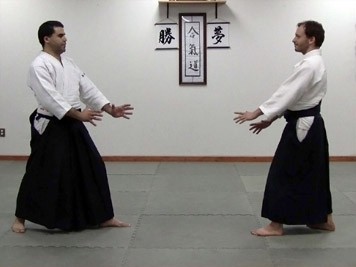
As it happens, one of my "real life" activities is playing softball, which is very similar to baseball in most respects. So seeing as how this is a great opportunity to combine the two subjects in the title of this blog (Baseball and Life for those with short-term memories), I'd like to share some thoughts I had while reflecting on my time taking BP at the batting cages last night. They involve my swing and how I can potentially improve it using the precepts of another one of my real life activities: Aikido. These two activities dovetail nicely - both involve physicality, can be meditative in nature, and contribute to overall self-betterment.
Here are four ways in which my brief studies in Aikido have informed the work in progress that is my baseball swing. And although I won't get a chance to try out these findings any time soon, since tonight's game has been postponed due to torrential rain in Los Angeles, I will be sure to keep my loyal readers up to date as far as my softball performance in future games.
- Stance
The Aikido stance (Hanmi posture) has you stand with feet shoulder width apart, one foot slightly in front of the other, with your weight spread evenly between your two feet. (Further, the weight on each foot should be evenly distributed between all four corners of the foot: each side of the ball and each side of the heel.) I know some batters like to start with their weight all the way back in preparation for a tremendous leg kick, but I personally feel more comfortable when I'm fully balanced. And since pitch reaction time isn't so important in slow-pitch softball (where I more often find myself having to slow down my approach due to the large amount of time it takes the ball to reach the plate), having my weight evenly distributed allows me to really settle in comfortably and wait till the perfect moment to start my swing.
- Bat Position
When performing technique in Aikido, there should always be a straight line between your center of gravity and your hands (see the picture at right). Even before actively trying to apply Aikido to baseball, I would hold the bat with my arms oriented such (rather than tucking the elbows in or holding the wrists up by my ears), as I felt it put my arms in the best position to generate power.
- Menuchi
But since it doesn't make sense to hold a bat as low as the O-Sensei holds his sword (pictured above), we have to combine the basic principle of establishing a line emanating from the center of gravity with another basic technique. Menuchi is the main technique in Aikido for protecting the head against a straight or downward strike. It involves raising the hands quickly but smoothly while shifting weight forward slightly. It can also be performed with a sword, most notably a wooden practice sword, which is similar to a bat in most respects. While the weight distribution and orientation of how the body is facing differs from how it's used in Aikido, using the Menuchi motion in the batter's box helps by reminding me of how the arms should be positioned and by putting the hands and arms in a more action-oriented position.
- Stride
When warming up in Aikido, one of the exercises we frequently do is to take "laps" back and forth across the dojo floor. We take these laps step by step in a very specific manner: move the front foot forward while remaining planted on the back foot, then as soon as you plant the front foot, move the back foot forward proportionally, and reestablish balance. You are supposed to emulate the feeling of gliding across the floor rather than pushing off from the back foot. The strategy of making an Aikido-style stride - rather than doing a big leg kick or double-tap with my front foot and planting it firmly down during the swing - allows me to actually move forward, through the ball, as I swing, generating more power and producing a more even, smooth swing in general.
...at least theoretically. As I mentioned, I thought up with this stuff hours after taking about 15 minutes' worth of swings at the batting cages (in the same way as an actor always thinks up the perfect line reading on the way out of the audition or a comic thinks up the perfect joke after losing the improv cage match), so I wasn't able to put this theory into practice. But the form is sound and time-tested by generations of Aikido practitioners in Japan, and the Japenese love Baseball!
As it happens, one of my "real life" activities is playing softball, which is very similar to baseball in most respects. So seeing as how this is a great opportunity to combine the two subjects in the title of this blog (Baseball and Life for those with short-term memories), I'd like to share some thoughts I had while reflecting on my time taking BP at the batting cages last night. They involve my swing and how I can potentially improve it using the precepts of another one of my real life activities: Aikido. These two activities dovetail nicely - both involve physicality, can be meditative in nature, and contribute to overall self-betterment.
Here are four ways in which my brief studies in Aikido have informed the work in progress that is my baseball swing. And although I won't get a chance to try out these findings any time soon, since tonight's game has been postponed due to torrential rain in Los Angeles, I will be sure to keep my loyal readers up to date as far as my softball performance in future games.
- StanceThe Aikido stance (Hanmi posture) has you stand with feet shoulder width apart, one foot slightly in front of the other, with your weight spread evenly between your two feet. (Further, the weight on each foot should be evenly distributed between all four corners of the foot: each side of the ball and each side of the heel.) I know some batters like to start with their weight all the way back in preparation for a tremendous leg kick, but I personally feel more comfortable when I'm fully balanced. And since pitch reaction time isn't so important in slow-pitch softball (where I more often find myself having to slow down my approach due to the large amount of time it takes the ball to reach the plate), having my weight evenly distributed allows me to really settle in comfortably and wait till the perfect moment to start my swing.
- Bat Position
When performing technique in Aikido, there should always be a straight line between your center of gravity and your hands (see the picture at right). Even before actively trying to apply Aikido to baseball, I would hold the bat with my arms oriented such (rather than tucking the elbows in or holding the wrists up by my ears), as I felt it put my arms in the best position to generate power.
- Menuchi
But since it doesn't make sense to hold a bat as low as the O-Sensei holds his sword (pictured above), we have to combine the basic principle of establishing a line emanating from the center of gravity with another basic technique. Menuchi is the main technique in Aikido for protecting the head against a straight or downward strike. It involves raising the hands quickly but smoothly while shifting weight forward slightly. It can also be performed with a sword, most notably a wooden practice sword, which is similar to a bat in most respects. While the weight distribution and orientation of how the body is facing differs from how it's used in Aikido, using the Menuchi motion in the batter's box helps by reminding me of how the arms should be positioned and by putting the hands and arms in a more action-oriented position.
- Stride
When warming up in Aikido, one of the exercises we frequently do is to take "laps" back and forth across the dojo floor. We take these laps step by step in a very specific manner: move the front foot forward while remaining planted on the back foot, then as soon as you plant the front foot, move the back foot forward proportionally, and reestablish balance. You are supposed to emulate the feeling of gliding across the floor rather than pushing off from the back foot. The strategy of making an Aikido-style stride - rather than doing a big leg kick or double-tap with my front foot and planting it firmly down during the swing - allows me to actually move forward, through the ball, as I swing, generating more power and producing a more even, smooth swing in general.
...at least theoretically. As I mentioned, I thought up with this stuff hours after taking about 15 minutes' worth of swings at the batting cages (in the same way as an actor always thinks up the perfect line reading on the way out of the audition or a comic thinks up the perfect joke after losing the improv cage match), so I wasn't able to put this theory into practice. But the form is sound and time-tested by generations of Aikido practitioners in Japan, and the Japenese love Baseball!
Monday, September 26, 2011
Developed Teams 2011: St. Louis Cardinals
As of this writing, the Cardinals are the only team in contention that I have not yet profiled for this project. And they're surging fast, as Wild Card teams in both leagues have faltered to the point of coming within a hair's breadth of giving up their leads. And with only two days left in the season, I just slipped under the wire with this, the profile of the St. Louis Cardinals' developed roster:
Talk about a well-rounded squad: except for the back end of the rotation, this team has everything. The lineup has a nice mix of power, average, speed and defense. The rotation has a good mix of established stars, up-and-comers, and washed-out no-names. And a couple of star setup men back up two guys who are currently closing in the majors (but only one of which was projected to do so). Their one weakness is starting pitching depth, as they weren't able to furnish even one contestant for long relief, but the prognosis gets slightly better when we recall that Kyle McClellan did some starting this year (however ineffectively) to fill in for the injured Adam Wainwright.
As this is likely the last of these I will complete before the end of the regular season, let's harken back to my old practices and start with the players still on the club. Starting with perennial All-Star Albert Pujols, even though there's not much I can say about his greatness that hasn't already been said... including the possibility of him leaving the team next year via Free Agency. (To me, it doesn't seem likely, but I've been wrong before.) Then there's also perennial All-Star Yadier Molina, the center of this team where heart and grit are concerned. Skip Schumaker made the transition from OF to 2B three years ago, but his offensive production hasn't really justified him starting in either position. And Jon Jay gets the backup outfielder spot, although it could just have easily gone to Allen Craig (they were ranked precisely two spots away from each other according to MLB's pre-season projections). Incidentally, both have had very good years, although Jay has seen more at-bats.
On the mound, the only starter to remain with the team is Jaime Garcia (who, incidentally, shares a birth day and date with your humble narrator, the only current major leaguer to do so... probably shouldn't have said that, for identity-theft protection reasons... but it's a nice piece of trivia). Out of the bullpen, we've got McClellan, who's making his bid to contribute as a swingman; righty-righty combo Boggs and Motte; and the kid who unexpectedly got a chance to close for the Redbirds, Fernando Salas. (On a side-note, what is it about pitchers of Mexican descent who became surprise closers this year? Not only has Salas been extremely effective, with a WHIP under 1 and a strikeout per inning, but Javy Guerra (although he was born in Texas) has put up an ERA under 2 while amassing 20 saves for the Dodgers. Something to think about...)
As far as players who have struck out on their own, we've got the ever-solid Dan Haren... about whom everyone scoffed when Billy Beane acquired him for Mark Mulder back in 2004, but just you go ahead and compare the careers of those two pitchers after the trade. J.D. Drew has struggled recently, his fall to mediocrity occurring as fast as his rise to stardom was supposed to be meteoric. Placido Polanco started the All-Star game at 3B this year (due in large part to a non-competitive field of players at the hot corner), but he remains one of the game's premier contact hitters. Speaking of premier players, Coco Crisp is right up there in the stolen base category: he trails only Brett Gardner in the AL and Michael Bourn in the NL. He's also not bad with the glove. But the most heralded defender on the team has to be Brendan Ryan, who's currently at SS for the Mariners.
Also on the Mariners are my backup infielder (Adam Kennedy) and his runner-up (Jack Wilson). Wilson is renowned for his glove, but I felt that Kennedy has more versatility and could contribute more coming off the bench. Also with him on the bench is pitcher-turned-outfielder Rick Ankiel. Nope, he hasn't gone back to pitching. Nope, he also doesn't routinely post OBP's well above .300. Brett Wallace was supposed to hit big starting at 1B for the Astros, but his individual performance has been roughly as disappointing as his team's as a whole. We know Luke Gregerson has talent setting up for Heath Bell, but we'll see if the righty gets a chance to close if/when the big guy hits Free Agency this winter.
A couple of players started the year with the Cardinals, but found themselves on the way to Toronto at the trade deadline. These are CF Colby Rasmus (whose relationship with manager Tony LaRussa supposedly played him off the team) and pitcher P.J. Walters (who has struggled in the minors as a starter for both clubs). Speaking of struggling in the minors as a starter, that statement also accurately describes Clayton Mortensen, who rounds out a cringe-worthy bottom 40% of the rotation. As for #3 starter Chris Narveson, what he lacks in name recognition, he makes up with almost exactly league-average statistical output.
Well, there you have it! I have written a developed team profile for every team now currently in the hunt for the playoffs, and then some. I don't know what exactly these findings tell us about these teams' chances of making the playoffs or how they'll fare therein, but I do hope they are as fun to read as they were to write. Next up: profiles of the developed rosters of the WORST teams around the league.
Talk about a well-rounded squad: except for the back end of the rotation, this team has everything. The lineup has a nice mix of power, average, speed and defense. The rotation has a good mix of established stars, up-and-comers, and washed-out no-names. And a couple of star setup men back up two guys who are currently closing in the majors (but only one of which was projected to do so). Their one weakness is starting pitching depth, as they weren't able to furnish even one contestant for long relief, but the prognosis gets slightly better when we recall that Kyle McClellan did some starting this year (however ineffectively) to fill in for the injured Adam Wainwright.
As this is likely the last of these I will complete before the end of the regular season, let's harken back to my old practices and start with the players still on the club. Starting with perennial All-Star Albert Pujols, even though there's not much I can say about his greatness that hasn't already been said... including the possibility of him leaving the team next year via Free Agency. (To me, it doesn't seem likely, but I've been wrong before.) Then there's also perennial All-Star Yadier Molina, the center of this team where heart and grit are concerned. Skip Schumaker made the transition from OF to 2B three years ago, but his offensive production hasn't really justified him starting in either position. And Jon Jay gets the backup outfielder spot, although it could just have easily gone to Allen Craig (they were ranked precisely two spots away from each other according to MLB's pre-season projections). Incidentally, both have had very good years, although Jay has seen more at-bats.
On the mound, the only starter to remain with the team is Jaime Garcia (who, incidentally, shares a birth day and date with your humble narrator, the only current major leaguer to do so... probably shouldn't have said that, for identity-theft protection reasons... but it's a nice piece of trivia). Out of the bullpen, we've got McClellan, who's making his bid to contribute as a swingman; righty-righty combo Boggs and Motte; and the kid who unexpectedly got a chance to close for the Redbirds, Fernando Salas. (On a side-note, what is it about pitchers of Mexican descent who became surprise closers this year? Not only has Salas been extremely effective, with a WHIP under 1 and a strikeout per inning, but Javy Guerra (although he was born in Texas) has put up an ERA under 2 while amassing 20 saves for the Dodgers. Something to think about...)
![]() |
| Where's the beard!? |
Also on the Mariners are my backup infielder (Adam Kennedy) and his runner-up (Jack Wilson). Wilson is renowned for his glove, but I felt that Kennedy has more versatility and could contribute more coming off the bench. Also with him on the bench is pitcher-turned-outfielder Rick Ankiel. Nope, he hasn't gone back to pitching. Nope, he also doesn't routinely post OBP's well above .300. Brett Wallace was supposed to hit big starting at 1B for the Astros, but his individual performance has been roughly as disappointing as his team's as a whole. We know Luke Gregerson has talent setting up for Heath Bell, but we'll see if the righty gets a chance to close if/when the big guy hits Free Agency this winter.
A couple of players started the year with the Cardinals, but found themselves on the way to Toronto at the trade deadline. These are CF Colby Rasmus (whose relationship with manager Tony LaRussa supposedly played him off the team) and pitcher P.J. Walters (who has struggled in the minors as a starter for both clubs). Speaking of struggling in the minors as a starter, that statement also accurately describes Clayton Mortensen, who rounds out a cringe-worthy bottom 40% of the rotation. As for #3 starter Chris Narveson, what he lacks in name recognition, he makes up with almost exactly league-average statistical output.
Well, there you have it! I have written a developed team profile for every team now currently in the hunt for the playoffs, and then some. I don't know what exactly these findings tell us about these teams' chances of making the playoffs or how they'll fare therein, but I do hope they are as fun to read as they were to write. Next up: profiles of the developed rosters of the WORST teams around the league.
Wednesday, September 21, 2011
Developed Teams 2011: Tampa Bay Rays
Remember way back in the beginning of September when the Rays trailed the Red Sox by upwards of 7 or 8 games in the Wild Card race? Well in the recent weeks, they've pulled to within 2 games, and are in very real danger of making the playoffs. In celebration of their upstart success, here's a team made up of players developed by the Tampa Bay Rays:
This is one of the most solid top two-thirds of a lineup you'll find anywhere, real or fantasy. We all remember what Carl Crawford was capable of doing just one year ago - i.e. serving as one of the most electric table-setters in modern leadoff history. B.J. Upton has developed into a legitimate power/speed threat after finally settling into a position. We all know about Josh Hamilton's MVP award, batting title, and former career-threatening drug habits. Evan Longoria hits home runs and does commercials (he's a double threat!). Aubrey Huff has slowed down a bit, but let's not forget (let's not forget, Dude) how he all-but carried the meager offense of the world champs last year. And Delmon Young took a few big steps back after a potential breakout season last year, but hopes of heading back to the playoffs after a trade has seemingly put some bounce back in his step.
The glut of outfielders makes for a somewhat imbalanced bench, but there really wasn't anything else to choose from. All the developed infielders are on the field in the starting lineup, with the exception of another first baseman, which doesn't help anybody. It's cool to have an established power hitter in Gomes and a future star in Jennings, but I'm sure any fantasy developed manager would like to have a little more versatility out there. But remember that this team has only been around for 13 years, so it's impressive they have such a star-studded roster as it is.
Speaking of stars, check out that rotation - every member of which still pitches for the Rays today. It includes rookies and All-Star starters, and includes some of the best young pitching talent under 30. The bullpen has a few question marks, including the role of closer, which is occupied by the rookie who was projected to close until the acquisition and subsequent rebirth of Kyle Farnsworth. But Wheeler is a veteran presence and Veras has proven his adequacy. But then there's the corps of spot starters, all of whom seem to have settled nicely into that role in real life, after tasting slight success in major league rotations.
Overall, this is one of the most well-rounded teams out there. If there was such thing as a Developed Team Tournament (hint hint for those friends of Rob Neyer who put together the virtual showdowns between those various All-Time Teams), I'd definitely put the Rays among the top contenders. That is, if every member of the infield stays healthy and the bench depth isn't tested at all. That could prove problematic. But in terms of top-shelf talent on paper, these youngsters will be hard to beat.
![]() |
| Hamilton, during his "working through some issues" phase |
The glut of outfielders makes for a somewhat imbalanced bench, but there really wasn't anything else to choose from. All the developed infielders are on the field in the starting lineup, with the exception of another first baseman, which doesn't help anybody. It's cool to have an established power hitter in Gomes and a future star in Jennings, but I'm sure any fantasy developed manager would like to have a little more versatility out there. But remember that this team has only been around for 13 years, so it's impressive they have such a star-studded roster as it is.
Speaking of stars, check out that rotation - every member of which still pitches for the Rays today. It includes rookies and All-Star starters, and includes some of the best young pitching talent under 30. The bullpen has a few question marks, including the role of closer, which is occupied by the rookie who was projected to close until the acquisition and subsequent rebirth of Kyle Farnsworth. But Wheeler is a veteran presence and Veras has proven his adequacy. But then there's the corps of spot starters, all of whom seem to have settled nicely into that role in real life, after tasting slight success in major league rotations.
Overall, this is one of the most well-rounded teams out there. If there was such thing as a Developed Team Tournament (hint hint for those friends of Rob Neyer who put together the virtual showdowns between those various All-Time Teams), I'd definitely put the Rays among the top contenders. That is, if every member of the infield stays healthy and the bench depth isn't tested at all. That could prove problematic. But in terms of top-shelf talent on paper, these youngsters will be hard to beat.
Monday, September 19, 2011
Developed Teams 2011: San Francisco Giants
Last week, I profiled a developed team of the AL Champion Texas Rangers. So what better time to introduce their opponents (and eventual defeaters) in the 2011 World Series, the San Francisco Giants:
An offense that earned the nickname "Torture" last year does not improve much when we look at players the Giants have developed, with only two offensive threats gracing the field. Conversely, the pitching staff excels across the board, whether it's the starting staff (featuring two-time Cy Young winner Tim Lincecum and the exact staff who backed him in the 2010 post-season) or the relief corps ("Fear the Beard" indeed...). It's especially interesting that all the Developed Giants' best players are still with the team, so it's not as if they're bringing lots of talent through the minors and letting it get away. The best player on this squad who left for greener pastures is undoubtedly Joe Nathan, despite the fact that he spent all of 2010 recovering from Tommy John surgery. He joins two other capable closers in the Giants bullpen: Brian Wilson and David Aardsma (who, incidentally, hasn't pitched at all in 2011 due to hip/Tommy John surgery).
But where to go from here? The more I try to write about this lineup, the more depressing it looks. I mean, look at that infield. Ishikawa may be good with the glove, but he's far below replacement level at first (or would be if he were even in the majors at this juncture). Pedro Feliz is a proven veteran, but one who's spent most of his time at third (a spot occupied by Pablo Sandoval, one of the two aforementioned threats). Emmanuel Burriss has good speed on the basepaths and Matt Downs has swung the bat pretty well for Houston, but neither are what you'd call top shelf talent. Kevin Frandsen has spent all of 2011 in AAA, where he hasn't exactly put on a show. Cody Ransom has put on a show in AAA... but it's led to just 12 sad games in the majors so far.
The outfield isn't much better: Fred Lewis never really developed into anything special, Nate Schierholtz profiles as more of a late-inning defensive replacement, and John Bowker hasn't yet shown that he can hit in the majors. Eugenio Velez is only on the roster because he was the only other player who had played in the outfield. Strangely enough, the position at which the Giants have the most stability is catcher, with Buster Posey and Yorvit Torrealba both having spent time as well-qualified starters for good teams.
But, ah, that pitching staff. We all know about the top four guys, all of whom played key parts in the Giants' World Series title last year. Cain is right there behind Lincecum, Sanchez has been bit by the injury bug, and Bumgarner still has his best years ahead of him. And while Kevin Correia has struggled a bit, despite his All-Star appearance, he's actually pretty decent for a fifth starter. In the 'pen, the quality doesn't drop off even beyond the three guys who've made their living closing games: Sergio Romo's ERA is so miniscule you'd have trouble finding it and Scott Linebrink has contributed to one of the league's best relief staffs on the Braves. If pitching and defense really is the key to winning championships, this club has the late-inning hardware to deal with the low-scoring games that come with that strategy.
Next week, in my effort to profile all the 2011 playoff contenders before the 2011 playoffs begin, I'll be looking at the Tampa Bay Rays, who are doing their best to edge out the Wild Card leading Red Sox.
An offense that earned the nickname "Torture" last year does not improve much when we look at players the Giants have developed, with only two offensive threats gracing the field. Conversely, the pitching staff excels across the board, whether it's the starting staff (featuring two-time Cy Young winner Tim Lincecum and the exact staff who backed him in the 2010 post-season) or the relief corps ("Fear the Beard" indeed...). It's especially interesting that all the Developed Giants' best players are still with the team, so it's not as if they're bringing lots of talent through the minors and letting it get away. The best player on this squad who left for greener pastures is undoubtedly Joe Nathan, despite the fact that he spent all of 2010 recovering from Tommy John surgery. He joins two other capable closers in the Giants bullpen: Brian Wilson and David Aardsma (who, incidentally, hasn't pitched at all in 2011 due to hip/Tommy John surgery).
But where to go from here? The more I try to write about this lineup, the more depressing it looks. I mean, look at that infield. Ishikawa may be good with the glove, but he's far below replacement level at first (or would be if he were even in the majors at this juncture). Pedro Feliz is a proven veteran, but one who's spent most of his time at third (a spot occupied by Pablo Sandoval, one of the two aforementioned threats). Emmanuel Burriss has good speed on the basepaths and Matt Downs has swung the bat pretty well for Houston, but neither are what you'd call top shelf talent. Kevin Frandsen has spent all of 2011 in AAA, where he hasn't exactly put on a show. Cody Ransom has put on a show in AAA... but it's led to just 12 sad games in the majors so far.
The outfield isn't much better: Fred Lewis never really developed into anything special, Nate Schierholtz profiles as more of a late-inning defensive replacement, and John Bowker hasn't yet shown that he can hit in the majors. Eugenio Velez is only on the roster because he was the only other player who had played in the outfield. Strangely enough, the position at which the Giants have the most stability is catcher, with Buster Posey and Yorvit Torrealba both having spent time as well-qualified starters for good teams.
But, ah, that pitching staff. We all know about the top four guys, all of whom played key parts in the Giants' World Series title last year. Cain is right there behind Lincecum, Sanchez has been bit by the injury bug, and Bumgarner still has his best years ahead of him. And while Kevin Correia has struggled a bit, despite his All-Star appearance, he's actually pretty decent for a fifth starter. In the 'pen, the quality doesn't drop off even beyond the three guys who've made their living closing games: Sergio Romo's ERA is so miniscule you'd have trouble finding it and Scott Linebrink has contributed to one of the league's best relief staffs on the Braves. If pitching and defense really is the key to winning championships, this club has the late-inning hardware to deal with the low-scoring games that come with that strategy.
Next week, in my effort to profile all the 2011 playoff contenders before the 2011 playoffs begin, I'll be looking at the Tampa Bay Rays, who are doing their best to edge out the Wild Card leading Red Sox.
Friday, September 16, 2011
Developed Teams 2011: Texas Rangers
Back to Baseball! After a long hiatus due to Burning Person, work travel, and the shock of returning to the de-fault normal world, I'm finally ready to resume filling the pages of the Internet with the wealth of statistical knowledge I have stored in my head and on my lists.
I now see that it would be foolish to try and complete a developed list of all 30 teams by the end of the season, but I can at least finish all the teams likely to make the playoffs. To that end, here's a developed team of the AL West-leading Texas Rangers:
This team has a lot of two things - namely first basemen and starting pitchers - and not a lot of anything else. To start from a position of strength: Mark Teixeira is clearly one of the elite hitters of the last decade, possibly even of his generation. What's more, he played the majority of his career for the Rangers (his first 4+ seasons, soon to be eclipsed by the Yankees). Carlos Pena, on the other hand, played only 22 games in Texas before bouncing around to five other teams - and most people in baseball were surprised that that number didn't become six at this year's trade deadline. Mitch Moreland, the Rangers' current starter at 1B, has played some games at 3B, right? Oh, wait, that was Chris Davis, who didn't make the team. Moreland played some RF... but sometimes you have to take the non-traditional path to make these types of projects work.
And those are only the first basemen to make the starting lineup. We've also got the Indians' starting (but injured) DH Travis Hafner (who played one more game for Texas than did Pena) and the Mariners' starting 1B Justin Smoak (acquired in the Cliff Lee deal just last year). Not a very versatile infield bench, but believe me, if there were any better choices, I would have made them. I submit as evidence the starting SS Joaquin Arias and the only player developed by Texas actually listed as a 3B (Mike Lamb), neither of whom has played in 2011.
If you look closely, you'll notice someone else who hasn't played in 2011 at the top of the order. But look at what Scott Podsednik did last year with the bat, split between KC and LAD. The veteran, who stole more bases than his advanced age last year, got a deal with Toronto, but missed making the roster due to injury. Julio Borbon hasn't played much this year, after being slotted as the starting CF, but on the other side of the field, Laynce Nix has swung the bat very well for Washington. On the bench, I chose to go with the proven speed of Jason Bourgeois rather than the potential power of John Mayberry Jr.
Now let's check out the starters. We all know about John Danks's struggle to win games earlier this season, and Colby Lewis has been so-so. But C.J. Wilson has brilliantly followed up his first season as a starter with an All-Star appearance, 16 wins, and an ERA just north of 3. Edinson Volquez started on Opening Day for the Reds, but has struggled so much with his command that manager Dusty Baker sent him to AAA for 13 starts in 2011. R.A. Dickey and his knuckleball have led to good peripherals, but the Mets haven't been able to win him many games. And that's just the starting rotation.
Alexi Ogando has been a great starter since following Wilson's lead in moving from the bullpen this season (although his stamina over a full season is still something he needs to work on). Derek Holland's moustache has brought success to the lefty, who currently is sitting on 14 wins. And Aaron Harang has taken the first step towards turning his career around with 13 wins for San Diego after three straight seasons of 6 wins apiece in Cincinnati (moving from a hitter's park to a pitcher's park might have something to do with that...). Not included in this roster: former playoff pitcher (and more recent trade bait) Tommy Hunter, former 17 game winner (and current minor league fodder) Scott Feldman, and of course veteran Doug Davis.
There was talk of moving Neftali Feliz to the rotation, but when Ogando cut in front of him, Feliz was forced to remain the closer. He hasn't been as dominant as in his Rookie of the Year season, which also included a trip to the World Series, but quite frankly a club could do a lot worse. Joaquin Benoit has shown almost equal flashes of brilliance and mediocrity as a setup man, and in 2011 he's been about on par with workhorse Nick Masset. Darren Oliver is with Texas now, and he was developed by Texas, but he's had a circuitous route back to his original team - one that's taken the veteran through seven other clubs, plus an additional stint with the Rangers in the early part of the Millennium.
The only two key players from this roster I haven't mentioned by name are former star Ivan Rodriguez and current star Ian Kinsler. In my opinion, these two players perfectly bridge the gap between the successful Rangers in the end of the 1990s and the successful Rangers in the start of the 2010s - except this current team also includes a competent pitching staff and a front office led by one of the team's and the game's most famous pitching legends. We'll just have to wait and see if they can repeat last year's long and deep trip into the post-season.
I now see that it would be foolish to try and complete a developed list of all 30 teams by the end of the season, but I can at least finish all the teams likely to make the playoffs. To that end, here's a developed team of the AL West-leading Texas Rangers:
This team has a lot of two things - namely first basemen and starting pitchers - and not a lot of anything else. To start from a position of strength: Mark Teixeira is clearly one of the elite hitters of the last decade, possibly even of his generation. What's more, he played the majority of his career for the Rangers (his first 4+ seasons, soon to be eclipsed by the Yankees). Carlos Pena, on the other hand, played only 22 games in Texas before bouncing around to five other teams - and most people in baseball were surprised that that number didn't become six at this year's trade deadline. Mitch Moreland, the Rangers' current starter at 1B, has played some games at 3B, right? Oh, wait, that was Chris Davis, who didn't make the team. Moreland played some RF... but sometimes you have to take the non-traditional path to make these types of projects work.
And those are only the first basemen to make the starting lineup. We've also got the Indians' starting (but injured) DH Travis Hafner (who played one more game for Texas than did Pena) and the Mariners' starting 1B Justin Smoak (acquired in the Cliff Lee deal just last year). Not a very versatile infield bench, but believe me, if there were any better choices, I would have made them. I submit as evidence the starting SS Joaquin Arias and the only player developed by Texas actually listed as a 3B (Mike Lamb), neither of whom has played in 2011.
If you look closely, you'll notice someone else who hasn't played in 2011 at the top of the order. But look at what Scott Podsednik did last year with the bat, split between KC and LAD. The veteran, who stole more bases than his advanced age last year, got a deal with Toronto, but missed making the roster due to injury. Julio Borbon hasn't played much this year, after being slotted as the starting CF, but on the other side of the field, Laynce Nix has swung the bat very well for Washington. On the bench, I chose to go with the proven speed of Jason Bourgeois rather than the potential power of John Mayberry Jr.
Now let's check out the starters. We all know about John Danks's struggle to win games earlier this season, and Colby Lewis has been so-so. But C.J. Wilson has brilliantly followed up his first season as a starter with an All-Star appearance, 16 wins, and an ERA just north of 3. Edinson Volquez started on Opening Day for the Reds, but has struggled so much with his command that manager Dusty Baker sent him to AAA for 13 starts in 2011. R.A. Dickey and his knuckleball have led to good peripherals, but the Mets haven't been able to win him many games. And that's just the starting rotation.
Alexi Ogando has been a great starter since following Wilson's lead in moving from the bullpen this season (although his stamina over a full season is still something he needs to work on). Derek Holland's moustache has brought success to the lefty, who currently is sitting on 14 wins. And Aaron Harang has taken the first step towards turning his career around with 13 wins for San Diego after three straight seasons of 6 wins apiece in Cincinnati (moving from a hitter's park to a pitcher's park might have something to do with that...). Not included in this roster: former playoff pitcher (and more recent trade bait) Tommy Hunter, former 17 game winner (and current minor league fodder) Scott Feldman, and of course veteran Doug Davis.
There was talk of moving Neftali Feliz to the rotation, but when Ogando cut in front of him, Feliz was forced to remain the closer. He hasn't been as dominant as in his Rookie of the Year season, which also included a trip to the World Series, but quite frankly a club could do a lot worse. Joaquin Benoit has shown almost equal flashes of brilliance and mediocrity as a setup man, and in 2011 he's been about on par with workhorse Nick Masset. Darren Oliver is with Texas now, and he was developed by Texas, but he's had a circuitous route back to his original team - one that's taken the veteran through seven other clubs, plus an additional stint with the Rangers in the early part of the Millennium.
The only two key players from this roster I haven't mentioned by name are former star Ivan Rodriguez and current star Ian Kinsler. In my opinion, these two players perfectly bridge the gap between the successful Rangers in the end of the 1990s and the successful Rangers in the start of the 2010s - except this current team also includes a competent pitching staff and a front office led by one of the team's and the game's most famous pitching legends. We'll just have to wait and see if they can repeat last year's long and deep trip into the post-season.
Subscribe to:
Posts (Atom)