Showing posts with label MLB 1999. Show all posts

Friday, May 15, 2020

Astrology Baseball 1999 Playoff Brackets

I recently put together a database for my All-Star Baseball 2001 Retrospective project, featuring statistics from the 1999 season, in honor of the Nintendo-64 game's 20th anniversary. I've recently been using data from this project to compare rosters from 20 years ago to their 2019-20 counterparts (which I previewed using the PlayStation 4's MLB The Show 20). I also just recently used that data from last season to project a simulated playoff bracket based on fantasy points, which gave me the idea to try the same idea on the '99 stats. So, with all the caveats that point totals do not equal win totals, here's a retroactively-projected (retrojected?) playoff bracket for the 1999 astrology fantasy baseball season.


Many people who remember the 1999 baseball season recall the spectacular offensive power output, due to it being at the peak of the steroid era. But 1999 was also at the peak of the Pedro Martinez era, and both of these phenomena are on display in the roster of the Scorpio Scorpions (see below). Pedro won the AL Cy Young Award in '99 with a rare 3,000+ point season, and he was backed by three outfielders who approached that total themselves: two who were never seriously linked to the various PED scandals (Ken Griffey Jr. and Shawn Green) and one who most definitely was (Sammy Sosa). Actually, while the above three played either center field or right field during the season in question, I would ask Green to move to first base (where he didn't play more than one game until 2004) to make room for Dante Bichette and Gary Sheffield to fill the outfield/DH mix. Virgo, the other representative from the Negative league is in a similar situation, with NL Cy Young Award winner Randy Johnson leading the way (3,407 points), although the supporting cast backing him hovered closer to the 2,600 - 2,700 point range rather than the 2,900s: Albert Belle (2,722), Bernie Williams (2,596), and Luis gonzalez (2,592), with honorable mention going to Mike Piazza (2,376), who was inducted into the Hall of Fame in the same class as Griffey.


On the Positive side (the league, not the outlook), Sagittarius got typically excellent production from NL Batting Champ Larry Walker (2,607 points, but 20.5 points per game), AL MVP Ivan Rodriguez (2,617), and Craig Biggio (2,356). The Archers offense was also helped by surprisingly above-average production from Diamondbacks Jay Bell (2,605) and Matt Williams (2,493), who were aided by a pre-humidor stadium in Arizona. The pitching staff was led by longtime Yankees teammates Mariano Rivera (2,171) and Mike Mussina (1,916), although 1999 was two years before the latter would head to New York. Back to the steroid era, Libra's offensive attack was fueled by a 3,000+ point attack by slugger Mark McGwire (3,022 to be exact), with two Texas Rangers Rafael Palmeiro (2,840) and Juan Gonzalez (2,584) following behind him. The Scales also have Mariano Rivera's NL award namesake counterpart Trevor Hoffman (1,969 points, but 30.8 PPG) saving games for ace Jose Lima (2,256) among others.


If we expand things to the same playoff structure that Major League Baseball used in 1999, we get the above bracket. Remember, there was only one Wild Card team per league back then - also we have to shift from the four Elemental divisions we use in a fantasy league (Air, Earth, Fire, Water) to the three Qualitative divisions we use when assigning Astrology signs to real world teams (Cardinal, Fixed, Mutable). Also note that in the positive league, SAG has to face LEO in the first round, since Wild Card winner Gemini plays in the same division as the top scorer - that was a thing back in the single Wild Card days. Speaking of Leo, they are unique in that the non-first base portion of their infield is comprised entirely out of shortstops: AL Batting Champ Nomar Garciaparra (2,537) in the actual shortstop position, another PED casualty Alex Rodriguez (2,450) moving to third base, like he would with the Yankees in 2004, and Edgar Renteria (1,928) taking second base, because their best option among those who actually qualified at the position are Terry Shumpert (1,261) and Damian Jackson (1,208).


Injuries kept us from seeing the typical Gemini first base logjam that occurred through the late 90's, with Jeff Bagwell, Frank Thomas, and Andres Galarraga. While the former put up a whopping 3,179 points, the latter didn't play at all in '99, and Thomas racked up only 1,772 points, finishing well behind Kevin Young (2,431) and John Jaha (2,153) for 1B/DH competition. On the Negative side, it's nice to see my home sign Cancer represented, even if I had to cook the eligibility numbers a little to get them there: I have Jose Canseco in a corner outfield spot, even though he played only six games in left field in '99, and would amass only seven more in the rest of his career. If I were a stickler for the rules, his spot would be filled by sophomore Geoff Jenkins (1,776), although that swap would still leave the Crabs ahead of the Goats. Capricorn is one of the rare signs led by a true shutdown ace, with Kevin Millwood (2,655) outscoring A's slugging first baseman (and McGwire's heir) Jason Giambi (2,600). CAP also sports the game's most professional hitter Edgar Martinez (2,169) and the namesake of the A's current field, Rickey Henderson (1,839).


When I was putting together the above chart to make these calculations, I plugged in the numbers in the order that the astrological signs appear in the karmic wheel - i.e. starting with Aries (March/April) and proceeding forward by the calendar. When I did so, I noticed something interesting: the point totals for each sign form a perfect bell curve. I mean, the SHAPE is not perfect, but each sign has more points than the one before it until we reach the peak (Scorpio, Octopber/November), after which each sign has fewer points than the one before it. That got me thinking about whether astrology point totals are cyclical, and whether, as we move through the years, we would see a similar curve if we organized the graph by the sign's calendar positions. When I've done charts like this in the past, I usually immediately sort from highest to lowest point totals, so I wouldn't necessarily have noticed this trend. So I went back to the chart I used for the 2019 retrojected playoff bracket and sorted it by date. The results, below, might shock and surprise you...
.
.
.
.
.
.
.
.
.


Yeah, no, I didn't think so. The graph is actually not quite as chaotic as it might first appear, since shifting the whole curve to the right or left would create a sort of "twin peaks" situation with Aries/Pisces as one and Cancer/Leo as another. But there's no accounting for the Virgo dip, even given that the Maidens won the fantasy league championship last year. also keep in mind that the scale of these two graphs is vastly different: the range between the highest and lowest scoring signs in 1999 is from right around 27,000 to 35,000, while the top scoring sign in 2019 didn't even make it to 32,000, while the low point remained around the same. I guess I'll have to widen the scope of this project if I want to start identifying any trends. I'll likely start with the midpoint of these two data points and look at 2009, even though MLB The Show 10 wasn't particularly groundbreaking as far as the series goes. Although I do still have a copy of it, if I want to break quarantine and pick up my old PS2 from my parents' place...

Sunday, April 26, 2020

Taurus - All-Star Baseball 2001 Retrospective

We're now about a week into Taurus season 2020, the first Taurus season in MANY years when we didn't have baseball to watch. I'm prepping something new and different for the analysis of the 2020 Taurus Fantasy Astrology Baseball squad, using the custom uniform creator in MLB The Show 20. But in the meantime, here's what the Bulls roster looked like two decades ago, to celebrate the 20-year anniversary of All-Star Baseball 2001!


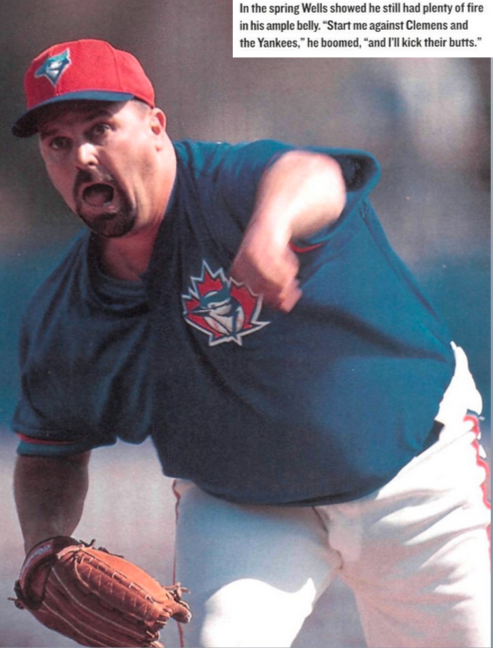
I'm starting with the pitching staff, since I found a good photo of David Wells from the Sports Illustrated baseball preview issue for the 1999 season (the year on which ASB01's statistics are based, it's a long story). Wells was newly acquired by the Blue Jays prior to that season, and he serves as a very serviceable number two starter on this Taurus team, even though he didn't reprise his ace-like numbers from 1998, when he was with the Yankees (2,234 overall fantasy points in 98 vs. 1,562 in 99). The staff ace is John Smoltz (with a team leading 1,773 pitching points), who in real life was part of Atlanta's vaunted Big 3 with Greg Maddux and Tom Glavine (who are both Aries). The starting staff features two more lefties in addition to Wells: Sterling Hitchcock of the Padres (1,487 points) and Mike Sirotka of the White Sox (1,250), although they do not show up in that order in the game's rotation, since I leaned heavily into ASB01's letter grade player rating system when I was arranging the rotation.

This preference given to the game's player ratings over fantasy points from the previous season is why veteran starter Todd Stottlemyre gets the nod in the game, despite just 687 fantasy points in 1999, his first with the Diamondbacks. Many other starting pitchers outscored Stottlemyre in 99, including Charles Nagy (1,158 points), Steve Woodard (1,137) and the enigmatic Hideki Irabu (1,124), but you can't argue with that sweet B+ rating (the other three had to settle for B's). The Taurus bullpen was led by a closer/setup pairing from the Detroit Tigers: Todd Jones (1,372 points) and Doug Brocail (929). Those two were supported by Mets setup reliever Turk Wendell (821) and situational Phillies lefty Rheal Cormier (just 472 points, but it's important to have a weapon against those tough left-handed hitters).


While NL MVP Chipper Jones was the team's top batter in 1999 (with an eye-popping 3,057 fantasy points), AL Rookie of the Year Carlos Beltran was a close second (2,381). What's more, the SI Royals team preview features a nice "Next Up..." blurb previewing his award-winning first full season. Just think, Beltran was THIS close to landing his first MLB managerial gig exactly 20 years later... Despite being a centerfielder by trade, Beltran shifts to left field in this Bulls lineup to make room for Chipper's Braves teammate (and namesake) Andruw Jones (2,211), who took home his second of what would be ten consecutive Gold Glove awards in 99. Actually, if I had to do this lineup over again, I would probably put Beltran in right field, leaving left field for Hall of Famer Tony Gwynn (just 1,446 points in an injury-shortened 99 season), and reserving the DH spot for Ben Grieve.

Speaking of Ben Grieve (1,764 points), the lumbering A's slugger set the AL Rookie of the Year stage for Beltran, winning the award in the previous season in 1998. His career never really panned out, especially considering the offensively-charged environment of the turn of the millennium. Elsewhere on the diamond, you probably couldn't imagine a bigger waste of defensive excellence than putting the slick-fielding Omar Vizquel at first base, but when your other starting shortstop option is Hall of Famer Barry Larkin, you could do a lot worse. Also, the only players who had first base eligibility in the Taurus player pool were Frank Catalanotto (834 points) and John Vander Wal (738). On an interesting cusp-related note, between the time I took the above screenshot of the Taurus lineup and now, when I'm writing this post, I did a deep dive into the birthdates of some players who were on the cusp of two different astrological signs, and I discovered that catcher Chris Widger - born 5/21/1971 in Wilmington DE, and who I had previously identified as a Gemini - was in fact a Taurus (according to helloastrology.com). Widger outscored projected Taurus starter Brook Fordyce by a narrow margin of 1,041 to 991 fantasy points in 1999, but since they both have a flat B rating in the ASB01 game engine, I don't know if I would have made that change if I discovered the discrepancy sooner. As far as the bench is concerned, we have Miguel Cairo (1,223 points) backing up speedster Eric Young Sr. (1,615) at second base, slugging third baseman Ken Caminiti (1,090) as another potential option at first base (he played 33 games there for the Braves in 2001), and yet another Jones (Jacque, 999) as a centerfield capable backup outfielder.

Sunday, April 12, 2020

Aries - All-Star Baseball 2001 Retrospective

When I first fired up my copy of MLB The Show 2020, I was mostly looking forward to using it as a simulation engine to flesh out my patented Fantasy Astrology Baseball lineups. This project is temporarily on hold, because I’m currently obsessed with my Road to the Show created character, Krys Regnom, #24 (an anagram for RyskMonger42, get it?), but that’s a story for another time. I was particularly excited about this year’s version of MLB The Show because it marks the 20-year anniversary of my second favorite baseball video game of all time: All-Star Baseball 2001 for the Nintendo 64. While the title would suggest that we won't hit that milestone until 2021, ASB01 was actually released prior to the 2000 MLB season, based on stats from 1999. (Remember that the naming conventions of sports games were a little wonky until 2006 - that's why you have both MLB 2006 and MLB 06: The Show released in back-to-back years for the same franchise.)

I just recently took an in-depth look at the Aries Rams projected lineup for the 2020 season. And since we’re still several days from the end of the current Aries season, I’m now jumping back 20 years to look at how the Aries roster looked, through the eyes of the ASB01 game engine. As with any video game based simulation, the batting lineup and pitching rotation will be based less on real world production, and more on the game’s player rating system, which uses letter grades, rather than the 1-100 scale from the more modern games. Also, since I don’t have the capability of capturing footage directly from my N64, you’ll have to make do with photos of my TV screen.


Wow, it’s crazy how far video games have come since the year 2000, huh? Actually, it’s kind of to be expected, isn’t it? Either way, since we don’t get a heckuva lot of information from these screenshots, I’ll supplement them at the bottom with an excerpt from the database I use to compile these rosters. But for now, marvel at the innocent simplicity of how these lineup screens were arranged. You could scroll to the right to view more stats, but they didn’t let you look at player attributes - for that, you had to navigate to the Scouting Report or Player Movement sections. The Switch Lineup button only differentiated between AL and NL ballpark (i.e. DH or no DH), so you didn’t have to slog through setting different lineups vs. right-handed or left-handed pitchers. Also, in addition to the 25-player active roster, each franchise only had 10 spaces for minor league players, rather than full rosters for Triple-A and Double-A, plus another 15 A-Ball spots. Times sure were simpler back then...

But enough about the inner workings of 20-year-old video games. What kind of firepower were the Aries Rams working with back in 1999-2000? The short answer is: not a whole lot, at least not relative to the superpowered offensive climate of the time. Third baseman Scott Rolen (an actual real-life Phillie at the time) garnered a coveted A+ overall rating, and he’s supported by a couple of A- players in Jeromy Burnitz and Brian Jordan. But those latter two outfielders and Rolen’s real-life teammate Rico Brogna at first base were the only three hitters to top 2,000 fantasy points in 1999, and all three barely even eclipsed that threshold. For context, only one other sign had fewer 2,000-point batters: the Gemini Twins have only two, but they both scored 3,000 points (hello Jeff Bagwell and Manny Ramirez). Of course, leadoff hitter Marquis Grissom just missed 2,000 with his power/speed combo, and both Rolen and David Justice would have approached that milestone with full seasons.

Of course, fantasy point totals aren’t the only way to evaluate a player, especially in a multi-level simulation like a video game. Justice has the contact-hitting profile that goes well as a tablesetter at the top of the lineup, even if he lacked the home run power of some of the bigtime point-scorers. Alex (S.) Gonzalez was putting up his usual decent production in 1999, before a torn labrum cut his season short. Bret Boone on the other hand was still a couple of seasons from breaking out with the 2001 Mariners. On the other side of the ball, Brad Ausmus gets the starting nod because of his sterling defensive reputation, even though according to his blurb from Sports Illustrated's pre-2000 baseball preview, Jason Varitek is also "a good glove man and handler of pitchers." Speaking of defense, Rolen earned eight Gold Gloves in his career, and his backup, not-yet-21-year-old Adrian Beltre, is no slouch himself. Rounding out the bench (which is not shown on the starting lineup page) is speedy infielder Quilvio Veras and slugging outfielder Glenallen Hill.


On the pitching side, this team was a lot more impressive than on offense. While you might not see the gaudy point totals reminiscent of today’s aces, remember that the juiced ball era of the late 2010’s pales in comparison to the juiced PLAYER era of the late 1990’s, driving pitching point totals down across the board. For example, while they averaged just under 1,600 points between them, the duo of Greg Maddux and Tom Glavine was rightly feared across the league. Shane Reynolds was the ace of a very talented Houston Astros pitching staff (then in the National League). Jon Lieber was a very serviceable workhorse in his first year with the Cubs. Veteran Bret Saberhagen pitched well when healthy, but it's a bit of a stretch to include him here, since he missed the entire then-upcoming 2000 season due to injury. Since I allow two additional starters to serve as long relievers, the righty-lefty combination of Masato Yoshii and Wilson Alvarez are also on the roster.


Since ASB01 doesn’t show the bullpen on the Starting Rotation screen (although it does give you letter grade ratings for each starter’s individual pitches, which is pretty neat), you can refer to the above chart for the team’s remaining relievers. Although Antonio "El Pulpo" Alfonseca is technically the closer, Indians fireballer Steve Karsay is the highest-rated reliever on the roster. He also ended up serving as Cleveland's ninth-inning specialist in 2000, the only year reaching 20 saves. Interestingly enough, Mike Trombley racked up saves in '99 with the Twins, but lost the closer's role to Ryan Kohlmeier when he went to the Orioles... not that there were many save opportunities for that club.


I took these screenshots just before the release of MLB The Show 2020, so I won't have too much time to fire up the old N64 and do many 20-year-old simulations. But depending on how long the 2020 season is delayed (if it happens at all), I might revisit these lineups as the karmic wheel spins.

Friday, December 6, 2019

All-Star Baseball 2001 - 20 years later

As I was rooting around the video games in my old room at my parents' house this Thanksgiving season, I realized that we are approaching the 20-year anniversary of the second-greatest baseball video game of all time: All-Star Baseball 2001 from Acclaim Sports. While the title would suggest that we won't hit that milestone until 2021, ASB01 was actually released prior to the 2000 MLB season, based on stats from 1999. (Remember that the naming conventions of sports games were a little wonky until 2006 - that's why you have both MLB 2006 and MLB 06: The Show released in back-to-back years for the same franchise.) Since my Nintendo 64 miraculously still works, and we still have a lot of offseason ahead of us, I thought this would be a good opportunity to extend my Astrology Baseball project into the previous decade... not to mention the previous MILLENNIUM.

In addition to featuring state of the art polygonal graphics and a hauntingly catchy menu song, ASB01 provides letter grades for each of the 1,092 players in the game, with just 32 of which earning the coveted A+ mark. I'll go over each of those players here, noting which sign they belong to, and touching on the overall Astrology landscape as baseball prepared to enter the 2000's. This should be enough to tide you over until I manage to create Astrology-themed rosters and simulate an entire season, using patented Controller Pak technology.


Three different signs had exactly five players with A+ grades, but I'm starting with Scorpio because their crop of A-plusses is by far the most impressive. Red Sox ace Pedro Martinez actually finished second overall in '99 fantasy points, but he did lead all MLB in points per game (minimum 40 innings) en route to the AL Cy Young award. I guess the game developers didn't think Pedro's real-life pitch mix was scary enough, because they replaced his changeup with a devastating screwball, which breaks just like his curve, but in the opposite direction. Joining Martinez in the Scorpions rotation is Phillies starter (and generally despicable human being) Curt Schilling, whose points-per-game average would have put his total in the 2,200 - 2,300 range if he had pitched a full season. (Five years before the "bloody sock" incident, Schilling was plagued with shoulder inflammation in '99 that eventually led to offseason surgery.)

Moving to the offensive side, the October/November team is led by centerfielder Ken Griffey Jr., who missed his third consecutive 50-home run season by just two, although he still led the AL in that category. In the game, Griffey appears on the roster of the Cincinnati Reds, following a February 2000 trade from the Seattle Mariners in exchange for Mike Cameron and Brett Tomko, among others. Another offseason trade victim, outfielder Shawn Green took his power/speed combo (42 HR, 20 SB) from Toronto to Los Angeles, in what was the first blockbuster trade that I remember having an effect on my baseball life. ("With Raul Mondesi on the Blue Jays, we won't hear any more chants of RAUUUUUUUL at Dodger Stadium!?") In a roster-construction note, when I build these simulated lineups, I will likely put Green at first base, even though he didn't play there regularly until 2004, because SCO also has the likes of Griffey, Sammy Sosa (the sign's fifth A+ player), Gary Sheffield, Dante Bichette, and Johnny Damon available for the outfield/DH slots.


Sagittarius has the same amount of A+ players as the sign that precedes it on the calendar, but SAG's group totaled about 2,000 fewer fantasy points than SCO's in 1999. That's not to take anything away from Rangers catcher Ivan Rodriguez, who won the AL MVP award that year, with a 35-HR, 25 SB season. Pudge also took home the seventh of his ten consecutive Gold Gloves, and the sixth of six consecutive Silver Sluggers behind the plate. Or Rockies slugging right fielder Larry Walker, who led the NL in all three "triple slash" categories (.379 AVG, .458 OBP, .710 SLG) as well as OPS (obviously). Of course, Walker only made it into 127 games that year, and the rarefied air of the pre-humidor Coors Field might have had something to do with his production, but he's a top tier talent nonetheless. Rounding out the A+ hitters for the Archers is Astros second baseman Craig Biggio, whose inclusion really dates the piece, given that his son Cavan just made his debut this past season for the Blue Jays at his father's old position. Speaking of Sagittarius dads, Ivan's son Dereck Rodriguez came up a season prior as a pitcher for the Giants, but he struggled through a sophomore slump in 2019.

Moving to the pitching side, we have two Hall of Famers who were teammates on the Yankees for eight years. Last year, Mariano Rivera became the first player to be unanimously voted into the Hall following a career as one of the most effective and decorated relief pitchers of all time. While the ASB01 engine does not include a cut fastball, which was Mo's signature pitch, the game still finds ways to make him just as unhittable as he was in real life. Starter Mike Mussina was still with the Orioles, his original team, when this game was released, but he would sign a free agent contract with the Yankees the very next year, and stay there through his retirement in 2008. Despite finishing out the back half of a Hall of Fame career in New York, would you believe that 1999 was the last time Moose made an All-Star team in his career?


Of the five Leo players who earned an A+ rating from All-Star Baseball 2001, the majority of them have dealt with serious performance enhancing drug issues in their illustrious careers. Going by 1999 fantasy points, Mariners shortstop Alex Rodriguez nearly cracked 2,500 points on the year, despite playing in only 129 games due to knee surgery. Later he would be suspended the entire 2014 season stemming from his ties to the Biogenesis scandal. Giants left fielder Barry Bonds also suffered through an injury-shortened 1999 season, as he was limited to 102 games after surgery to repair a torn triceps tendon and bone spur. While his career didn't extend into the era where it was actually illegal to use steroids, his well-publicized link to them has kept Bonds and his thicc neck out of the Hall of Fame, despite holding the all-time records for home runs and walks. Yankees starting pitcher Roger Clemens is the most curious A+ player in the game, as his 1999 season (his first in New York) was decidedly pedestrian: a 14-10 record, 4.60 ERA, 7.8 K/9, and 4.3 BB/9 over 30 starts and 187.2 innings. I guess he was still dining out on his consecutive AL Cy Young awards in '97 and '98 with the Blue Jays. As far as his ties to PED's, Clemens was famously named in the 2007 Mitchell Report, which was released just months after what would prove to be The Rocket's final season.

Now moving to the (ostensibly) clean players, we have Boston shortstop Nomar Garciaparra, who won the AL batting title in 1999 (the first of two consecutive times he would take home the crown, but we couldn't possibly know that at the time this game was released). When putting these rosters together, Nomar's presence will push A-Rod over to third base, where he would later play for the majority of his time with the Yankees, starting in 2004. Interestingly enough, this Lions team will likely consist of an all-shortstop infield, as Edgar Renteria of the Cardinals will occupy second base. Leo's final A+ player is Astros closer Billy Wagner, who leads a lights-out bullpen that also includes A-grade relievers John Wetteland, Troy Percival, and Jeff Zimmerman, not to mention B+ closer Danny Graves.


Remember how Pedro Martinez finished second overall in 1999 fantasy points? He was eclipsed only by NL Cy Young winner Randy Johnson, in his first year with the Diamondbacks (but his 35th year representing Virgo). The Big Unit would go on to win the next three Cy Youngs, in addition to taking home a World Series title in 2001, where he shared WS MVP honors with fellow ASB01 A+ starter Curt Schilling. During this simulation, Johnson will pitch to an A+ catcher (and fellow Hall of Famer) Mike Piazza, who finally settled in New York for '99 after splitting the previous year between the Dodgers, Marlins, and Mets. To round things out, Virgo has two A+ outfielders who had polar opposite career tracks: Albert Belle was known for his volatile personality and played for three different teams in his career ('99 was his first with the Orioles), while Bernie Williams had a charming, soft-spoken demeanor, and spent his entire playing days with the Yankees.


Remember how Barry Bonds has been frozen out of the Hall of Fame despite holding a monumental home run record? The same is true for Libra slugger Mark McGwire, who was the first major leaguer to hit 70 home runs, which he did in 1998, breaking Roger Maris's long-standing record of 61* in the process. (There's not footnote corresponding to that asterisk, it was just a reference to the Billy Crystal TV movie of the same name.) There was never really any doubt that Big Mac was juicing, but the ASB01 developers don't care how you become great, just whether or not you have A+ level talent. Joining him in a power-packed Scales lineup is outfielder Juan Gonzalez, who went from the Rangers to the Tigers in a blockbuster trade following the game's platform '99 season. Libra's last A+ player actually did make it into the Hall of Fame, as there are no steroid accusations tainting the career of longtime Padres closer Trevor Hoffman, despite a '99 season that was more excellent than otherworldtly.


Three different signs had two A+ players, but only Gemini boasts two 3,000 point scorers among them. Astros first baseman and leader of the "Killer B's" Jeff Bagwell had such a great 1999 (he played in all 162 games and had a 40-30 season, while leading the NL in runs and walks) that he pushes fellow Hall of Fame first baseman Frank Thomas to the DH slot. Speaking of the Hall of Fame, Indians right fielder Manny Ramirez has been the victim of a PED-related freezeout, similar to Bonds, McGwire, Clemens, et al. Despite Aquarius's status as a perennial fantasy astrology bottom-feeder, the sign does boast some impressive talent at the top of its depth chart. Roberto Alomar was at the top of his power/speed game in '99 (although the jury is out on whether Manny's PED influence might have spread around the Cleveland clubhouse) and Vladimir Guerrero was in his prime as one of the game's best pure hitters. Aries has the curious distinction of having two A+ players who each failed to eclipse 1,800 fantasy points in 1999: Phillies third baseman Scott Rolen played in only 112 games after his season ended in August because of a back injury, but Hall of Fame Braves starter Greg Maddux has no excuse, having pitched 219.1 innings over 33 starts.


Of the four signs that had just one A+ player each, Taurus leads the charge with NL MVP winner Chipper Jones, one of six players who scored more than 3,000 points during the 1999 season. In a funny side note, despite Chipper's career-high 45 home runs and 1.074 OPS that season, the Braves third baseman was not named to the All-Star team, the only time he was snubbed between 1996 and 2001. Yankees shortstop Derek Jeter was the face of the All-Star Baseball video game franchise from 1998 through its end in 2005. 1999 was arguably the Cancer Crab's finest season, as Cap'n Jeets put up career highs in runs, hits, homers, and all three triple-slash line categories. Speaking of people who are the face of things, Pisces pitcher Kevin Brown made the cover of the 1999 Sports Illustrated baseball preview issue, after signing a seven-year, $105 million contract with the Dodgers, the first ever nine-figure contract in MLB history. Rounding out ASB01's A+ players is Mariners designated hitter Edgar Martinez, who didn't have a phenomenal '99 season (although he did lead the AL in OBP) and offers nothing in terms of defensive value (he managed only five games at first base that year), but it's nevertheless fascinating that all 12 astrological signs have at least one A+ representative.


So there you have it, a 20-year retrospective into the underlying statistics behind All-Star Baseball 2001, one of the best baseball video games of all time. As it happens, in the same trip back home where I rediscovered my N64, I also found a copy of MLB 10: The Show for PS2 lying around. Remember, by the time of that game's release, the titles of baseball video games had changed to reflect the year of the upcoming season, which means I have the means to do both a 20-year AND a 10-year retrospective as we approach the 2020 season. I guess I know what I'm doing with my weekend now...