Tuesday, May 26, 2020

Gemini - 2019 Fantasy Astrology Baseball Recap

Well, the karmic wheel has turned to Gemini, and there is still no concrete hope of Major League Baseball resuming any time soon. Due to this coronavirus-related delay, rather than look at the Gemini Twins Fantasy Astrology roster through the lens of projected 2020 rankings. So instead, I'm doing a retrospective look back at the top performing Gemini's of 2019, much like I did with Taurus earlier this month.


The three core offensive players in this lineup are all eligible at third base, but only two of which are represented in my patented collage made from the pre-2019 and 2020 issues of Lindy's magazine. Anthony Rendon, fresh off a World Series championship with the Nationals (his only team up until now) signed a giant free agent contract to star opposite Mike Trout in Anaheim. Yoan Moncada recently started delivering on his former top prospect status, the same year that the White Sox moved him from the keystone to the hot corner - he'll serve as the Gemini DH with the presence of Rendon. And fellow Cuban Yuli Gurriel has primarily been a first baseman here in the states, but he spent some time at third for the Astros while Alex Bregman was covering short for the injured Carlos Correa.


Working around the fringes of the roster, I've played a bit fast and loose with some positional qualifications in order to compile the highest-scoring group of players. The above pencilled-in lineup features an outfield of David Fletcher and Corey Dickerson in the corners flanking Avisail Garcia, who played some center field with the Rays last year, but not enough to qualify. This configuration would leave shortstop entrusted to Eric Sogard, a primary second baseman with Toronto and Tampa Bay in 2019, but who has seen action all around the infield in his career. If you want to be a stickler for center field eligibility, Harrison Bader would replace Sogard in the lineup, with Garcia moving back to his customary right field, and Fletcher shifting to shortstop. If you consider this layout from a simulation standpoint (as opposed to focusing strictly on fantasy points), Bader's stellar defense might offset the offensive gap between him and Sogard, especially if the latter's newfound home run stroke turns out to be mostly smoke and mirrors.


But Gemini's strength in recent years has been the pitching rotation, and this year is no different. Jacob deGrom is coming off two straight Cy Young awards, and 2019 All-Star Game MVP Shane Bieber almost equalled him in fantasy points in his breakout season. Aaron Nola fell off from his otherworldly 2018 performance, but he still scored essentially the same amount of points as emergent (Minnesota) Twins ace Jose Berrios. Those four are all represented in my collage, leaving only Zack Wheeler pictureless - although he's certainly not penniless, having signed a big free agent deal with the Phillies in the offseason.

Speaking of the Phillies, their closer Hector Neris leads a weak bullpen, points-wise, although it's certainly not lacking for upside and name recognition. Matt Barnes came this close to being Boston's new closer, before the 2019 breakout of Leo Brandon Workman. Speaking of Red Sox closers, Craig Kimbrel was this sign's top reliever for 8 of the past 9 years, but an extended stay on the free agent market last offseason didn't do him any favors before he signed with the Cubs. And 2016 postseason hero Andrew Miller never quite recovered from his overusage that year, but the talent and the track record are certainly there.

As far as pitching depth goes, Gemini also boasts sign-stealing whistleblower Mike Fiers, Padres youngster Joey Lucchesi, deGrom's current and Wheeler's former Mets teammate Steven Matz, Angels promising lefty Andrew Heaney, and Indians graduating rookie Aaron Civale. This impressive pitching staff looks like it won't get too much support from a top-heavy but weak lineup, although remember that Gemini was a tiebreaker away from winning the fairly shallow Air Division last year, and anything can happen in the playoffs. In a simulation environment, however - where the teams are divided by quality instead of element - there's no chance that the Twins will overtake the absolutely stacked Sagittarius Archers in the Positive Mutable Division. Who knows, maybe baseball will still be happening by the time Sagittarius rolls around if a delayed start pushes the season into the winter...

Friday, May 22, 2020

LEGO Chronicles: Blacktron Spectral Starguider

Exhaust from a shoulder-mounted jetpack fills the air, as an astronaut flies in and skids to a halt. His Suit is white with black trim, including a black helmet, on which the translucent green visor accentuates the large green letter B on his chest.

"Blacktron astronaut Breeze reporting for dutyyy!" he singsongs heroically, throwing up a smart salute. As he pops open his visor, it's clear that the green tint had been muting the garish red of his bushy moustache and eyebrows, and also the blue of his temple-mounted cybernetic implant. "How's the progress on the Spectral Starguiderrr?"

"Going adequately," responds the deck officer, adjusting her glasses over the microphone in her headset. "We're just mounting the retro-rockets on the command module."

The command module is marked by twin domed octagonal canopies, of the same translucent green as Breeze's visor. They're mounted on either side of a massive central brick, 2 units wide by 4 units long by 2 units tall, on hinges that open outwards like suicide doors. Actually, the size and shape of them makes the canopies resemble big green elephant ears - with the trunk formed by a curving windscreen that folds down from the bottom when opened.

"You know you're not going to be able to fit that jetpack in there," comments the deck officer, as she oversees the robots, technicians, and robotic technicians that are welding the white camera-looking elements to the side.

"What? I'm not flying this thing," replies Breeze dismissively. "I'm just the tech officer, here to oversee the computer and the cargo. Speaking of which... I think that's Flash with the goods right now."

"Just got it from the fellers at the computer lab," pipes another astronaut, entering with a whoosh from automatic doors. Although their spacesuits are the same, this one - codenamed Flash - wears a black-backpack-mounted air-filtration system, much less cumbersome than Breeze's jetpack. Their auburn hair drapes lazily down over a blue cybernetic implant, secured like a headband over their forehead. "Why don't you go fire up that computer? That's your purview, right?"

"Already on my way to the technical module now," replies Breeze, sliding his hand over a large yellow arrow at the back of said module. This one also has twin green canopies, but these are mounted on the tops of two portholes, so that they open up instead of out. But the main method of entry is through the back, which started to fold down from the bottom, after the roof first folded forward from the top, releasing the latch.

Inside, mounted on the rear edge of a white basket-like 4x4 base was a black electronic container box, the front of which was covered with a complex series of buttons, dials, and lights. With a few taps of Breeze's fingers, the panel starts glowing, and a slot opens up near the top.

"All yours, Flash." He gestures towards machinery.

"Thank you, kind sir," rejoins his partner, producing a 1x2 smooth tile, which is itself covered with similar circuitry. When held lengthwise, or in landscape mode, there's an amber readout screen near the top-middle, flanked by red and green buttons of various sorts. Flash inserts the microchip into the slot, which makes a satisfying plink as the larger computer engulfs the smaller one.

"Done. Now it's all ready for transport across the planet's surface, no matter what's out there." Breeze fiddles with the controls and the module starts to close up again. "So remind me, we're taking this thing where?"

"We got a distress call from an M-Tron vehicle in sector 7-G," explains the deck officer, barely reacting as a robotic crane swings next to her and grabs the tech module. "He was following beacon out that way, when a large blast of some kind blew his craft apart and fried his circuits. This thing you're carrying should help him get back on his feet... or his wheels at least."

Speaking of wheels, the tech module has been settled in the middle of a giant, six-wheeled base, locking into place with a pin at its back. Each wheel is easily the size of an astronaut, helmet included, with the front wheels set wider apart than the middle, which were themselves wider than the rearmost ones, sort of like a reverse-arrow.

"Heh, M-Tron," scoffs Breeze. "Using the power of MAGNETS to locate and transport vial resources," Breeze mockingly recited from some promotional material. "Couldn't use your super magnetic capabilities to remain out of harm's way THIS time, could you? We Blacktron have advanced in ways which set us apart from our adversaries, to become the strongest power in the universe! Just look at this jetpack!"

"Calm down, Breeze," chuckles Flash, hopping into  the command module, which had just been attached to the front end of the base. Unlike the tech module, the command module attached right between the two front wheels, so that Flash was basically sitting at ground level. "And in fact, you'll probably have to take that thing off while you're driving the base. You'll need both hands to steer this behemoth."

"Ugh, alright, I hear ya," grumbles Breeze, as he stuffs his jetpack into the tech module, replacing it with an air tank, same as Flash's. His now-slimmer profile settles in at a jackhammer-looking joystick, mounted on a crosshatched plate above the two rear wheels. "I still don't know why they didn't make it so you could control this thing from the command module."

"Hey, I fly the modified ship when it's in shuttle formation," barks Flash. "You know, when the command module locks in place with the tech module? What do you think those two huge jets on the back of your computer box are for?"

"Well, whatever they're for, I sure hope they don't turn on while I'm standing here, or I'll be fried." Breeze looks nervously at the two engines in front of his face, and then at the smaller single one behind him, designed to move the combined craft. "At least out here I'll be able to get some fresh air. OK, open the doors and fire up that antenna thing of yours!"

A green and black rectangular dish mounted on the top of the command module starts twisting back and forth, relaying information onto the windscreen in front of Flash. At the same time, the deck officer punches something into her command tablet, and two huge doors of the hangar swing open.

"Alright, we've got a signal," cries flash into their communicator. "Continue due east for 25 degrees. And watch out for that terrain."

"Copy that, Flash-O," returns Breeze. "Just let me maneuver this thing... wha-? REAR wheel turning? How am I possibly gonna control this thing?"

Thus the Spectral Starguider crawled off into an alien sunset, to the sound of two old friends complaining.

Friday, May 15, 2020

Astrology Baseball 1999 Playoff Brackets

I recently put together a database for my All-Star Baseball 2001 Retrospective project, featuring statistics from the 1999 season, in honor of the Nintendo-64 game's 20th anniversary. I've recently been using data from this project to compare rosters from 20 years ago to their 2019-20 counterparts (which I previewed using the PlayStation 4's MLB The Show 20). I also just recently used that data from last season to project a simulated playoff bracket based on fantasy points, which gave me the idea to try the same idea on the '99 stats. So, with all the caveats that point totals do not equal win totals, here's a retroactively-projected (retrojected?) playoff bracket for the 1999 astrology fantasy baseball season.


Many people who remember the 1999 baseball season recall the spectacular offensive power output, due to it being at the peak of the steroid era. But 1999 was also at the peak of the Pedro Martinez era, and both of these phenomena are on display in the roster of the Scorpio Scorpions (see below). Pedro won the AL Cy Young Award in '99 with a rare 3,000+ point season, and he was backed by three outfielders who approached that total themselves: two who were never seriously linked to the various PED scandals (Ken Griffey Jr. and Shawn Green) and one who most definitely was (Sammy Sosa). Actually, while the above three played either center field or right field during the season in question, I would ask Green to move to first base (where he didn't play more than one game until 2004) to make room for Dante Bichette and Gary Sheffield to fill the outfield/DH mix. Virgo, the other representative from the Negative league is in a similar situation, with NL Cy Young Award winner Randy Johnson leading the way (3,407 points), although the supporting cast backing him hovered closer to the 2,600 - 2,700 point range rather than the 2,900s: Albert Belle (2,722), Bernie Williams (2,596), and Luis gonzalez (2,592), with honorable mention going to Mike Piazza (2,376), who was inducted into the Hall of Fame in the same class as Griffey.


On the Positive side (the league, not the outlook), Sagittarius got typically excellent production from NL Batting Champ Larry Walker (2,607 points, but 20.5 points per game), AL MVP Ivan Rodriguez (2,617), and Craig Biggio (2,356). The Archers offense was also helped by surprisingly above-average production from Diamondbacks Jay Bell (2,605) and Matt Williams (2,493), who were aided by a pre-humidor stadium in Arizona. The pitching staff was led by longtime Yankees teammates Mariano Rivera (2,171) and Mike Mussina (1,916), although 1999 was two years before the latter would head to New York. Back to the steroid era, Libra's offensive attack was fueled by a 3,000+ point attack by slugger Mark McGwire (3,022 to be exact), with two Texas Rangers Rafael Palmeiro (2,840) and Juan Gonzalez (2,584) following behind him. The Scales also have Mariano Rivera's NL award namesake counterpart Trevor Hoffman (1,969 points, but 30.8 PPG) saving games for ace Jose Lima (2,256) among others.


If we expand things to the same playoff structure that Major League Baseball used in 1999, we get the above bracket. Remember, there was only one Wild Card team per league back then - also we have to shift from the four Elemental divisions we use in a fantasy league (Air, Earth, Fire, Water) to the three Qualitative divisions we use when assigning Astrology signs to real world teams (Cardinal, Fixed, Mutable). Also note that in the positive league, SAG has to face LEO in the first round, since Wild Card winner Gemini plays in the same division as the top scorer - that was a thing back in the single Wild Card days. Speaking of Leo, they are unique in that the non-first base portion of their infield is comprised entirely out of shortstops: AL Batting Champ Nomar Garciaparra (2,537) in the actual shortstop position, another PED casualty Alex Rodriguez (2,450) moving to third base, like he would with the Yankees in 2004, and Edgar Renteria (1,928) taking second base, because their best option among those who actually qualified at the position are Terry Shumpert (1,261) and Damian Jackson (1,208).


Injuries kept us from seeing the typical Gemini first base logjam that occurred through the late 90's, with Jeff Bagwell, Frank Thomas, and Andres Galarraga. While the former put up a whopping 3,179 points, the latter didn't play at all in '99, and Thomas racked up only 1,772 points, finishing well behind Kevin Young (2,431) and John Jaha (2,153) for 1B/DH competition. On the Negative side, it's nice to see my home sign Cancer represented, even if I had to cook the eligibility numbers a little to get them there: I have Jose Canseco in a corner outfield spot, even though he played only six games in left field in '99, and would amass only seven more in the rest of his career. If I were a stickler for the rules, his spot would be filled by sophomore Geoff Jenkins (1,776), although that swap would still leave the Crabs ahead of the Goats. Capricorn is one of the rare signs led by a true shutdown ace, with Kevin Millwood (2,655) outscoring A's slugging first baseman (and McGwire's heir) Jason Giambi (2,600). CAP also sports the game's most professional hitter Edgar Martinez (2,169) and the namesake of the A's current field, Rickey Henderson (1,839).


When I was putting together the above chart to make these calculations, I plugged in the numbers in the order that the astrological signs appear in the karmic wheel - i.e. starting with Aries (March/April) and proceeding forward by the calendar. When I did so, I noticed something interesting: the point totals for each sign form a perfect bell curve. I mean, the SHAPE is not perfect, but each sign has more points than the one before it until we reach the peak (Scorpio, Octopber/November), after which each sign has fewer points than the one before it. That got me thinking about whether astrology point totals are cyclical, and whether, as we move through the years, we would see a similar curve if we organized the graph by the sign's calendar positions. When I've done charts like this in the past, I usually immediately sort from highest to lowest point totals, so I wouldn't necessarily have noticed this trend. So I went back to the chart I used for the 2019 retrojected playoff bracket and sorted it by date. The results, below, might shock and surprise you...
.
.
.
.
.
.
.
.
.


Yeah, no, I didn't think so. The graph is actually not quite as chaotic as it might first appear, since shifting the whole curve to the right or left would create a sort of "twin peaks" situation with Aries/Pisces as one and Cancer/Leo as another. But there's no accounting for the Virgo dip, even given that the Maidens won the fantasy league championship last year. also keep in mind that the scale of these two graphs is vastly different: the range between the highest and lowest scoring signs in 1999 is from right around 27,000 to 35,000, while the top scoring sign in 2019 didn't even make it to 32,000, while the low point remained around the same. I guess I'll have to widen the scope of this project if I want to start identifying any trends. I'll likely start with the midpoint of these two data points and look at 2009, even though MLB The Show 10 wasn't particularly groundbreaking as far as the series goes. Although I do still have a copy of it, if I want to break quarantine and pick up my old PS2 from my parents' place...

Tuesday, May 12, 2020

Astrology Baseball 2019 Playoff Recap

When I went back through my 2019 Baseball Database to calculate the top-scoring roster of the Taurus Bulls, I also did the same for the other eleven signs, because... we're in quarantine and why not? I then totaled up the fantasy points for each team's lineup for the sake of comparison. (For our purposes, a lineup includes 17 players total: five starting pitchers, three relievers, eight position players, and a designated hitter.) As it happens, Taurus scored the lowest aggregate point total of any sign; although to be fair, 2019 had the smallest range between the top- and bottom-scoring teams in the last two decades. Check out the chart below to see the full fantasy astrology landscape from 2019.


As you can see, along with each sign's 2019 point totals, I've included their polarity, element, and quality, which are different ways to divide the signs up into divisions, depending on your simulation method. For a traditional head-to-head fantasy league, I find it easiest to just make four divisions based on the elements. But when you're running a simulation using a video game, and have to connect each sign to a real-life team, the best option is to use the three qualities, to link up with the East/Central/West divisional alignment. The Positive/Negative polarity divide works with either format, separating all the signs into two six-team "leagues."

As far as what actually happened last year, Virgo ended up winning the fantasy championship over Leo. I also ran a simulation using MLB The Show 19, where Aries ended up victorious over Taurus, so as you can see, overall point totals are not a good predictor of who will eventually come out on top over the course of a season. Winning a league championship requires a great deal of good timing: avoiding injuries, receiving favorable matchups, and having the right players get hot at the right times. Simply adding up all the points scored by all the players on a particular team doesn't tell nearly the whole story. But it is a good starting point for looking back on past fantasy astrology seasons.


In a fantasy league setting, where the top team in each division makes the final tournament, we would be looking at a bracket like the one above. That is, in fact, exactly how things turned out in the actual league, despite the fact that it was set up for weekly head-to-head matchups. Actually, it's not EXACTLY how it turned out: ESPN's fantasy baseball client swapped the matchups, since they generate the bracket based on win-loss record rather than leagues. Speaking of win-loss records, I also included each sign's to show you how things stacked up. So, just like using the point-total-only method, some of the top teams are left out of the final shuffle: Sagittarius and Gemini both also finished 13-8, but SAG finished two games behind LEO, while GEM was awarded a mystery tie-breaker against LIB... and BOTH finished above Cancer, which was just two games ahead of their closest divisional rival Pisces (9-12).


The Leo Lions, the top overall scoring sign of 2019, achieved their greatness because of, who I like to call the Three M's: Mike Trout, Max Scherzer, and J.D. Martinez. You could add more, like sturdy veteran starter Madison Bumgarner, graduating rookie Mike Soroka, and barely-missed qualifying middle infielder Adalberto Mondesi. But the latter three lags the top three in both point-scoring potential (6,980 points to 5,180) and star power (3 MVP's, 3 CYA's, 9 Silver Sluggers and 18 All-Star appearances for the top three, versus just 2 Silver Sluggers (both MadBum's) and 5 ASG's).


I know assuming that overall point totals correlates to win-loss record is patently false... but let's do it anyway, for the sake of predicting what a projected playoff bracket would look like in a simulation based on the current MLB postseason structure. With the current one-game Wild Card play-in situation, only one team from each league gets left out of the festivities: sorry Aquarius and Tarurus, maybe next year.


In this configuration, both the Leo Lions (see above) and the Cancer Crabs would get first round byes. Believe it or not, there is a tragic connection between these two teams: one of Mike Trout's best friends was the late Tyler Skaggs, who died unexpectedly last year. (Trout is actually seen wearing Skaggs's jersey #45 in one of his full size feature pics in Lindy's 2020 preview magazine.) The incredible thing is that before his Skaggs passed away, he accrued enough fantasy points to make one final appearance in the CAN rotation. He is a tremendous talent, who will continue to be missed across the game.

Looking at the numbers, Cancer only beat Pisces by a handful of points. Diving deeper, I can tell you that wouldn't have happened if I didn't play fast and loose with positional eligibility rules in the above lineup. As constructed, the Crabs infield from first to third would be DJ LeMahieu, Trea Turner (because he's played there before, even though he didn't qualify - and also any shortstop COULD technically play second base), Jorge Polanco, and Eugenio Suarez. If you're a stickler for second base eligibility, Turner and Lemahieu would both shift to their right, Cody Bellinger would come IN from the outfield, and Ramon Laureano would take his place in center field. This would result in a net loss of about 480 points, and rocket Pisces into the points lead of the Negative League.


Obviously the name that jumps out is defending (and two-time) Cy Young Award winner Justin Verlander, just because of his rare milestone of eclipsing 3,000 fantasy points in a season. The fact that he's followed by three-time Cy Young winner Clayton Kershaw makes this an even more devastating rotation. (Also, think back to 2018 when Luis Severino was healthy, and you begin to see the true potential here.) I've talked enough about how I mistakenly classified Brad Hand as an Aries for years... so instead, I'll mention the line of four 2,000-point scoring outfielders in a row in the middle of their lineup. While it doesn't approach the tragedy of Skaggs, it's worth mentioning that Trey Mancini is currently recovering from surgery to remove a malignant growth, so I'd like to extend my best wishes to him and his family.


So that's what the Fantasy Astrology Playoffs in 2019 would have looked like, if they were determined by fantasy point totals alone. I don't have my copy of MLB The Show 19 anymore. (I sadly traded it to GameStop for credit towards the new one... which I couldn't even collect because of the coronavirus...) But if anyone can recommend some good simulation software, I would be interested in plugging these numbers in and seeing what happens!

Saturday, May 9, 2020

Taurus - 2019 Fantasy Astrology Baseball Recap

Last week, in honor of it being Taurus season, I posted a video about the how the Taurus Bulls Fantasy Astrology Baseball squad might look, as simulated by MLB The Show 20. I was going to follow up that video game-centric analysis with one focused on head-to-head fantasy baseball. But then it got depressing, looking forward to an MLB season that very well might not happen - and the depressing part is that it probably SHOULD not happen, given our country's response to the coronavirus. So instead, I opted to take a more retrospective look, focusing on the 2019 Taurus Bulls, as viewed through maximizing the fantasy points the players scored last year (as opposed to projecting the top points totals that the players will score in the coming year). Enjoy more of my patented color-coded Excel spreadsheets, and images from Lindy's magazine baseball previews.


In the video, I praised speedster Jonathan Villar's versatility, but the ironic thing is that he is best served in this team's DH slot. Looking down the positions he qualifies for, Jose Altuve is a fixture at second base (unless the aftermath of the sign-stealing-scandal is that he's simply not that good without cheating, but that seems unlikely), and Corey Seager had a decent, if injury-shortened, season at shortstop. It doesn't even make sense putting him in center field, like the Marlins were planning to do when they acquired him pre-pandemic, since Victor Robles plays spectacular defense, while doing just enough with the bat to land among the Taurus top nine 2019 point scorers. Narrowing our focus to the top five, Robles will be flanked in the outfield by Austin Meadows and Michael Brantley, the same as in the game simulation - ditto with Matt Chapman at third, whose top-flight glove is just a bonus where fantasy points are concerned.

Across the diamond, things get a little interesting. Going strictly by points, Joc Pederson should get the nod at first base, thanks to his newly (and barely) gained eligibility there. However, two spots under him, we get Miguel Sano, who scored fewer overall points (1,585), but had a huge advantage in points-per-game (15.0), showing that he mashed the ball during the brief stretches when he was healthy last year. He also hadn't yet officially transitioned over to first base, but I tend to lean more towards ability than eligibility when determining these retroactive rosters. Speaking of players who are good when healthy, the top-RATED Taurus on MLB The Show doesn't even factor into this roster because of injuries, but Aaron Judge racked up 14.3 PPG when he was on the field in '19. Also worth mentioning, the highest points per game amongst Taurus batters belongs to slugging outfielder Aristides Aquino (15.8), while '19 rookie utility player Tommy Edman actually surpassed Seager with 12.9 PPG.


Four of the top five starters projected by The Show also appear on this roster, although not in the order presented here: Lynn and Stroman are the one-two, but John Means is rated below Trevor Richards, despite a roughly 15-point differential in points per game. Ironically, Homer Bailey, who himself averaged more than 40 PPG, is rated below Zack Godley, who barely cracked 11. Other 40-pluses in the Taurus player pool include graduating rookie Jordan Yamamoto of the Marlins (42.0), and still-rookies Tony Gonsolin (45.0) and Jose Urquidy (41.6). The bullpen does include three players who served as closers for at least part of the 2019 season, but the top-scoring alignment only includes two of them: Emilio Pagan and Mychal Givens, with Sam Dyson earning the nod over Shawn Kelley, who put up a line of 699 / 13.7 as the part-time ninth-inning option for the Rangers, in his last season before threatening to retire.

Sunday, April 26, 2020

Taurus - All-Star Baseball 2001 Retrospective

We're now about a week into Taurus season 2020, the first Taurus season in MANY years when we didn't have baseball to watch. I'm prepping something new and different for the analysis of the 2020 Taurus Fantasy Astrology Baseball squad, using the custom uniform creator in MLB The Show 20. But in the meantime, here's what the Bulls roster looked like two decades ago, to celebrate the 20-year anniversary of All-Star Baseball 2001!


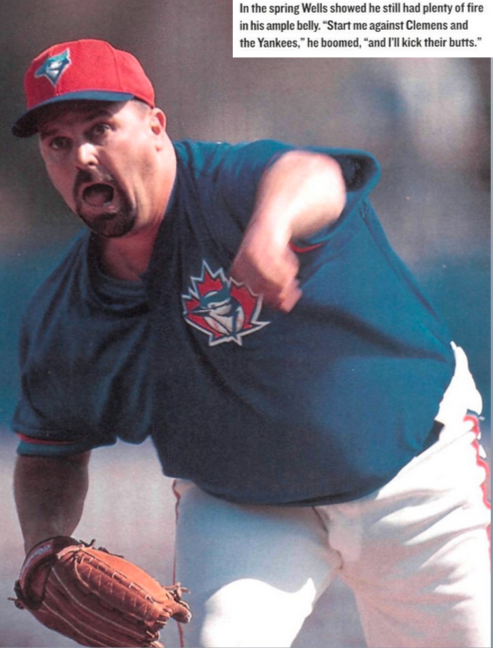
I'm starting with the pitching staff, since I found a good photo of David Wells from the Sports Illustrated baseball preview issue for the 1999 season (the year on which ASB01's statistics are based, it's a long story). Wells was newly acquired by the Blue Jays prior to that season, and he serves as a very serviceable number two starter on this Taurus team, even though he didn't reprise his ace-like numbers from 1998, when he was with the Yankees (2,234 overall fantasy points in 98 vs. 1,562 in 99). The staff ace is John Smoltz (with a team leading 1,773 pitching points), who in real life was part of Atlanta's vaunted Big 3 with Greg Maddux and Tom Glavine (who are both Aries). The starting staff features two more lefties in addition to Wells: Sterling Hitchcock of the Padres (1,487 points) and Mike Sirotka of the White Sox (1,250), although they do not show up in that order in the game's rotation, since I leaned heavily into ASB01's letter grade player rating system when I was arranging the rotation.

This preference given to the game's player ratings over fantasy points from the previous season is why veteran starter Todd Stottlemyre gets the nod in the game, despite just 687 fantasy points in 1999, his first with the Diamondbacks. Many other starting pitchers outscored Stottlemyre in 99, including Charles Nagy (1,158 points), Steve Woodard (1,137) and the enigmatic Hideki Irabu (1,124), but you can't argue with that sweet B+ rating (the other three had to settle for B's). The Taurus bullpen was led by a closer/setup pairing from the Detroit Tigers: Todd Jones (1,372 points) and Doug Brocail (929). Those two were supported by Mets setup reliever Turk Wendell (821) and situational Phillies lefty Rheal Cormier (just 472 points, but it's important to have a weapon against those tough left-handed hitters).


While NL MVP Chipper Jones was the team's top batter in 1999 (with an eye-popping 3,057 fantasy points), AL Rookie of the Year Carlos Beltran was a close second (2,381). What's more, the SI Royals team preview features a nice "Next Up..." blurb previewing his award-winning first full season. Just think, Beltran was THIS close to landing his first MLB managerial gig exactly 20 years later... Despite being a centerfielder by trade, Beltran shifts to left field in this Bulls lineup to make room for Chipper's Braves teammate (and namesake) Andruw Jones (2,211), who took home his second of what would be ten consecutive Gold Glove awards in 99. Actually, if I had to do this lineup over again, I would probably put Beltran in right field, leaving left field for Hall of Famer Tony Gwynn (just 1,446 points in an injury-shortened 99 season), and reserving the DH spot for Ben Grieve.

Speaking of Ben Grieve (1,764 points), the lumbering A's slugger set the AL Rookie of the Year stage for Beltran, winning the award in the previous season in 1998. His career never really panned out, especially considering the offensively-charged environment of the turn of the millennium. Elsewhere on the diamond, you probably couldn't imagine a bigger waste of defensive excellence than putting the slick-fielding Omar Vizquel at first base, but when your other starting shortstop option is Hall of Famer Barry Larkin, you could do a lot worse. Also, the only players who had first base eligibility in the Taurus player pool were Frank Catalanotto (834 points) and John Vander Wal (738). On an interesting cusp-related note, between the time I took the above screenshot of the Taurus lineup and now, when I'm writing this post, I did a deep dive into the birthdates of some players who were on the cusp of two different astrological signs, and I discovered that catcher Chris Widger - born 5/21/1971 in Wilmington DE, and who I had previously identified as a Gemini - was in fact a Taurus (according to helloastrology.com). Widger outscored projected Taurus starter Brook Fordyce by a narrow margin of 1,041 to 991 fantasy points in 1999, but since they both have a flat B rating in the ASB01 game engine, I don't know if I would have made that change if I discovered the discrepancy sooner. As far as the bench is concerned, we have Miguel Cairo (1,223 points) backing up speedster Eric Young Sr. (1,615) at second base, slugging third baseman Ken Caminiti (1,090) as another potential option at first base (he played 33 games there for the Braves in 2001), and yet another Jones (Jacque, 999) as a centerfield capable backup outfielder.

Thursday, April 16, 2020

The Music of Red Dead Redemption 2 - Story

In case you hadn't heard, I recently finished my Let's Play series of Rockstar Games' epic western action-adventure masterpiece Red Dead Redemption 2 on my YouTube channel. This effort, which I started way back in May of 2019, has produced 32 episodes of highly bingeable content for these safer-at-home times, and it's not over yet. So far I've only covered the main storyline (Chapters 1 thru 6) - I haven't tackled the two chapters worth of epilogues. In that time period, I was so focused on plaything through the game again and editing the episodes down into episode-sized chunks that I hadn't paid much attention to the two official music albums that were released in support of the game: one titled "Original Soundtrack" and the other "Original Score."


Many of the track titles on these albums share names with missions in the game, but as is the case with many soundtrack albums, the track listing doesn't come close to matching up with when they appear in the game. So I've gone through all the tracks on both albums and arranged them in chronological order, at least according to when I played each mission in my Let's Play (the game gives you a lot of freedom as far as the sequencing of certain missions). I've also noted the episode of my Let's Play and the mission title in which each musical theme appears (in the rare cases where the track title/mission title do not match up). Fair warning: there are MAJOR SPOILERS AHEAD, so if you want to enjoy the story of the game with a blank slate, I would highly recommend watching my Let's Play BEFORE reading this musical recap.


1. "By 1899, The Age of Outlaws and Gunslingers Was At An End"
Album: Original Score, Track 1
Artist: Jeff Silverman, Woody Jackson, Luke O'Malley
Let's Play: Episode 1 (Chapter 1, Mission 1 - Cold Open)

When you begin a new story in Red Dead Redemption 2, the first thing you see is a series of four text titles on a black screen setting up the world of the game. Predictably enough, this music cue is what plays when these titles run across your screen. The title of this track is the first screen, followed by these three:

America was becoming a land of laws...

Even the west had mostly been tamed.

A few gangs still roamed but they were being hunted down and destroyed.


2. "Outlaws From the West"
Album: Original Score, Track 2
Artist: Woody Jackson
Let's Play: Episode 1 (Chapter 1, Mission 1)

The first mission of the game is called "Outlaws From the West," and part of the track with the same name during this mission. Actually, it plays during the cutscene signaling the END of the mission, as Dutch, Arthur, and Micah rescue Sadie Adler from what's left of her burning homestead. And the snippet of the track you hear during the actual game is quite different than the version included on the album, which has a much fuller arrangement and a pronounced drum track.

A more complete version of this track plays in Episode 3 of my Let's Play, during the mission titled "Who The Hell is Leviticus Cornwall?" (Chapter 1, Mission 5) as we're on the way to rob our first train of the game. The consequences of this particular heist will haunt Arthur and his merry band of outlaws throughout the rest of the game, as the above-mentioned Leviticus Cornwall expends his significant resources in an attempt to track us down and bring us to justice.

3. "Mountain Hymn"
Album: Original Soundtrack, Track 8
Artist: Rhiannon Giddens
Let's Play: Episode 3 (Chapter 1, Mission 6 - Eastward Bound)

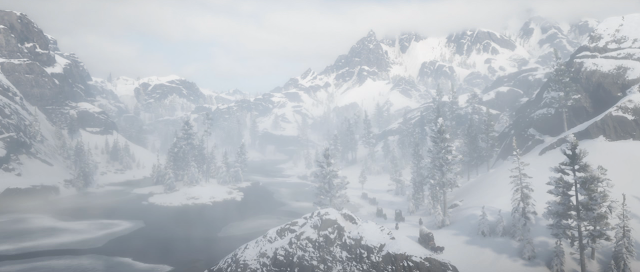
With the train job complete, we get treated to a nice montage of the gang traveling eastward, down from the mountains, towards their new camp in Horseshoe Overlook near Valentine (which also marks the end of Chapter 1). The music that plays during said montage includes some of the non-lyrical elements of "Mountain Hymn" from the Original Soundtrack album. The full version of this track also plays during the end credits, but we'll save that for another time.


4. "An American Pastoral Scene"
Album: Original Score, Track 17
Artist: Woody Jackson
Let's Play: Episode 9 (Chapter 2, Mission 19)
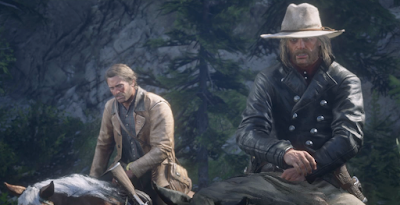
Chapter 2 has some of my favorite musical moments of the game, including the haunting soulful fiddle when Arthur and Hosea ride into the mountains to hunt a bear (Exit, Pursued by a Bruised Ego), the hopeful triumphant battle theme when Arthur, Javier, and Charles rescue Sean from a group of bounty hunters (The First Shall Be Last), and the absolutely inspired comedic saloon piece when Arthur and Lenny go out drinking (A Quiet Time). But the only representation of Chapter 2 in the official albums is from Micah's second mission "An American Pastoral Scene." This mission, which we first have to unlock by breaking Micah out of jail (in Blessed Are the Meek?, which itself has a nice playful battle theme), features Arthur and Micah robbing a banking stagecoach, only to get ambushed by some O'Driscolls. However, the track on the album doesn't play during any of this exciting action; it's what you hear while Arthur and Micah leisurely ride their horses to the robbery location.


5. "Blessed Are the Peacemakers"
Album: Original Score, Track 3
Artist: Woody Jackson
Let's Play: Episode 16 (Chapter 3, Mission 12)

Towards the end of Chapter 3 (in which the gang moves to a new camp at Clemens Point in the state of Lemoyne), Micah brokers a meeting between Dutch and his arch-nemesis Colm O'Driscoll to settle their long-running feud. It turns out (rather predictably) that the whole thing was a setup: Colm's plan was to capture Arthur, and use him as bait to lure Dutch and the gang into a trap, where the law would be waiting for them. Arthur manages to escape, despite being wounded and exhausted, and this track plays during a cutscene where his loyal horse carries his unconscious form back to camp.


6. "Blood Feuds, Ancient and Modern"
Album: Original Score, Track 18
Artist: Woody Jackson
Let's Play: Episode 16 (Chapter 3, Mission 14)

Soon after the debacle with the O'Driscolls (well, actually a few weeks after, in the timeline of the game), young Jack Marston, son of John Marston and Abigail Roberts, gets kidnapped by one of our new enemies Catherine Braithwaite, as payback for us meddling in the affairs of her family. The gang rides out to Braithwaite Manor, accompanied by this track, and then proceeds to kill everyone in the vicinity and torch the plantation house to the ground.


7. "There She Is... A Real City, The Future"
Album: Original Score, Track 9
Artist: Mario Batkovic
Let's Play: Episode 17 (Chapter 3, Mission 15 - The Battle of Shady Bell)

Before the gang destroyed Braithwaite Manor, we learned from Catherine Braithwaite that her sons had delivered young Jack to Angelo Bronte, the crime lord who runs the city of Saint Denis. This short track plays when Dutch and Arthur first ride to the outskirts of this marvel of civilization to try to get information about Bronte's whereabouts (which is also the cutscene that signals the start of Chapter 4).


8. "Country Pursuits"
Album: Original Score, Track 16
Artist: Arca, Woody Jackson
Let's Play: Episode 22 (Chapter 4, Mission 16)

We ended up getting Jack back from Angelo Bronte rather quickly, but Bronte continues to do us wrong, including convincing us to rob a trolley station, which turns out to be a complete disaster. (That mission, Urban Pleasures, has a memorable, if somewhat repetitive musical motif of its own.) Dutch gets it into his head that Bronte set us up, so he enlists the help of a fisherman named Thomas to help sneak us into Bronte's house so we can take revenge. This track plays when Dutch first introduces Thomas to Arthur, and the two outlaws help the fisherman and his partner Jules deal with some gator troubles.


9. "Revenge is a Dish Best Eaten"
Album: Original Score, Track 5
Artist: Mario Batkovic, Woody Jackson
Let's Play: Episode 22 (Chapter 4, Mission 17)

With Thomas's help, the gang sneaks into Angelo Bronte's house under the cover of night, systematically eliminates his guards, drags him from his opulent bedroom, rows him out into the swamps, drowns him off the side of the boat, and feeds him to a hungry alligator. Actually, it's Dutch and Dutch alone who performs those last two acts, displaying some early signs of his mental decline, which will continue to plague the gang for the rest of the game.


10. "Banking, The Old American Art"
Album: Original Score, Track 8
Artist: Michael Leonhart, Woody Jackson
Let's Play: Episode 23 (Chapter 4, Mission 18)

With Bronte dealt with, the gang has just one more big score planned, the one that's supposed to get us enough money to leave the country and start a new life on a tropical island somewhere: robbing the bank of Saint Denis. Hosea and Abigail are all set to draw the police away with a distraction, while the rest of us loot the vault, but based on the somber tone (and dissonant tones) of this track, which plays while Dutch outlines the plan as we travel from camp into the city, things aren't likely to go according to plan...


11. "Everybody Wake Up"
Album: Original Score, Track 10
Artist: Woody Jackson
Let's Play: Episode 23 (Chapter 4, Mission 18 - Banking, the Old American Art)

As you might have expected, the bank job was a disaster. Hosea and Lenny were killed, John was arrested, and the rest of us had to escape by stowing away on a ship bound for Cuba and bribing the captain. However, things take yet another turn for the worse when the ship gets caught in a storm and ends up sinking. The title of the track refers to Dutch trying to wake us all up in the moment of crisis. We just can't catch a break...


12. "Welcome to the New World"
Album: Original Score, Track 11
Artist: Senyawa, Colin Stetson
Let's Play: Episode 23 (Chapter 5, Mission 1)
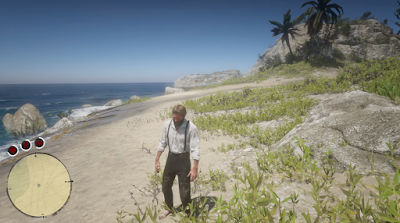
The start of Chapter 5 is marked by Arthur waking up after being shipwrecked on the island of Guarma. The first part of this track plays while Arthur wanders aimlessly along an admittedly very pretty beach while searching for the rest of his party. They are eventually reunited, but soon fall into even more trouble, getting captured by the local militia, whose mission it is to protect the evil Alberto Fussar's sugar plantation.

The second part of this track (the plucked guitar and subtle vocals starting at around 1:05) actually plays during the intro to a mission from Episode 24 called "Hell Hath No Fury," where Arthur and the gang help Haitian freedom fighter Hercule Fontaine in his battle against Fussar, who has enlisted the help of the Cuban navy. The music during the actual firefight is much more epic, but it doesn't appear on the official soundtracks.


13. "Paradise Mercifully Departed"
Album: Original Score, Track 12
Artist: Senyawa, Woody Jackson, Colin Stetson
Let's Play: Episode 24 (Chapter 5, Mission 5)

This next track, however, is plenty exciting, with cool island rhythms to boot. It plays during the very next mission, where the gang has to eliminate Fussar and rescue the captain of the boat that Hercule has arranged to take us back to the mainland. This mission is fun because it shows a rare instance of Arthur and Micah working together effectively without things going horribly wrong.


14. "Unshaken"
Album: Original Soundtrack, Track 1
Artist: D'Angelo
Let's Play: Episode 25 (Chapter 5, Mission 6 - Dear Uncle Tacitus)

The gang splits up and heads to shore separately, with Arthur being dropped off at the Van Horn trading post. It's a long journey from here to the Gang's last known hideout at Shady Bell, which is the perfect opportunity for a stirring travel montage accompanied by D'Angelo's dulcet tones! NOTE: the version of this song that appears in my Let's Play is in a different key than the official album version; I tried to pitch-shift it down to keep YouTube's algorithm from recognizing it, but it got flagged for copyright anyway.


15. "Fleeting Joy"
Album: Original Score, Track 14
Artist: Colin Stetson, Woody Jackson
Let's Play: Episode 25 (Chapter 5, Mission 7)

Almost immediately after locating the gang's new hideout, the Pinkertons show up and start shooting up the place. Talk about bad luck... or is it? This track perfectly captures the sense of desperation in this mission as Arthur mows down as many Pinkertons as possible with a gatling gun in the middle of the swamp.


16. "Doctor's Opinion"
Album: Original Score, Track 13
Artist: Colin Stetson
Let's Play: Episode 25 (Chapter 5, Mission 8 - A Fork in the Road)

After we drive off the Pinkertons, Sadie takes it on herself to come up with a plan to free John from federal prison, where he has been languishing since the failed bank robbery. But as Arthur rides to meet her in Saint Denis, he collapses from a coughing fit, and is helped to the doctor by a kindly stranger. I won't spoil the specific diagnosis he gets, but suffice it to say, it's not good news.


17. "Icarus and Friends"
Album: Original Score, Track 15
Artist: Colin Stetson, David Ralicke, Jeff Silverman
Let's Play: Episode 25 (Chapter 5, Mission 9)

Even the diagnosis of a terminal illness doesn't mean we get to take a break from our outlaw lifestyle. Immediately after being discharged from the doctor, Sadie explains the particulars of her plan: fly over the penitentiary in a hot air balloon to make sure John is there, then break him out some other day in a completely separate mission, the music of which does not appear on the soundtrack albums.


18. "Mrs. Sadie Adler, Widow"
Album: Original Score, Track 4
Artist: Woody Jackson
Let's Play: Episode 30 (Chapter 6, Mission 16)
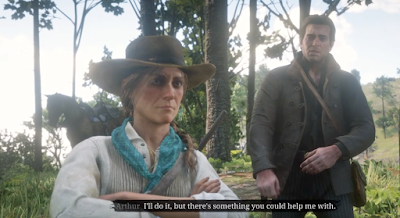
To understand the full emotional weight of this track, we have to go back to the very first mission of the game, where Sadie Adler hid and watched helplessly as the O'Driscoll gang murdered her husband and took over their home. Even after we ensured that the leader of the gang, Colm O'Driscoll, was hanged by the neck until dead, Sadie won't be satisfied until the entire lot of them are eradicated, and now she knows where the rest of them are holed up. This track embodies the rage she feels as she and Arthur complete her quest for revenge.


19. "It All Makes Sense Now"
Album: Original Score, Track 6
Artist: Woody Jackson
Let's Play: Episode 32 (Chapter 6, Mission 20 - Red Dead Redemption)

That's right, the final mission of the main storyline is called "Red Dead Redemption," same as the previous game in the series. You'd think they could have picked something that would have avoided the need for a whole disambiguation Wikipedia article. This is also the mission where the SPOILERS start to get crazy, so please, please, PLEASE watch the Let's Play if you haven't already before reading any further.

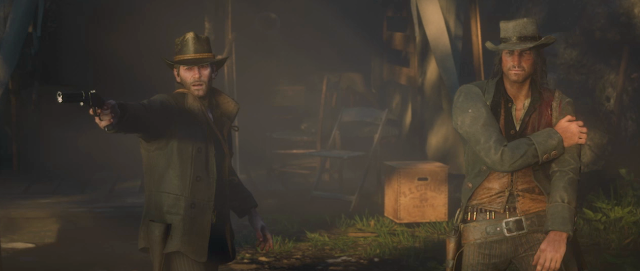
The cutscene at the start of this mission actually starts with a version of the first few bars of the track "Outlaws from the West," from way back in the very first mission, but this is the music that plays when you first get control of Arthur during the mission. For some background, John was supposedly killed during the previous mission (at least according to Dutch and Micah), so when John's wife Abigail gets captured by the Pinkertons, the rest of the group decides to let her go. Only Arthur and Sadie are willing to ride to her rescue, and they do so to the heroic strains of this track. A couple of other bombshell reveals in this mission: Agent Milton, the leader of the Pinkertons, reveals that Micah has been a rat all along, and Abigail knows the location of the chest where Dutch has been hiding the gang's savings!

20. "That's the Way It Is"
Album: Original Soundtrack, Track 3
Artist: Daniel Lanois
Let's Play: Episode 32 (Chapter 6, Mission 20 - Red Dead Redemption)

After saving Abigail (or, more accurately, being saved BY Abigail), Arthur is determined to travel back to camp and tell Dutch the truth about Micah. As he rides, we get a very emotional traveling montage, underscored by Daniel Lanois's lyric track "That's the Way It Is." As an interesting note, remember that the choices that you make during the game affect your character's honor level, and the album version of the track is what plays if you have net positive honor at this point in the game. If you are heartless enough to have accrued negative honor, there's a slightly different instrumental backing track, plus different snippets of dialogue that you hear while riding.


21. "Red Dead Redemption"
Album: Original Score, Track 19
Artist: Woody Jackson
Let's Play: Episode 32 (Chapter 6, Mission 20)

As if things weren't confusing enough, there is now a game, a mission, AND a music track, all titled "Red Dead Redemption." This track plays during said mission, but only if you make a particular decision. Towards the end, the game lets you choose whether to help John get to safety, or return to camp to recover the money. If you make the honorable choice to go with John, you hear this track as the two of you scurry up to the top of a mountain, and during the ensuing fist fight with Micah.

On the other hand, if you choose the dishonorable path of returning to camp, you hear a different music track: "Mountain Finale" by Daniel Lanois from the Original Soundtrack. It's much less emotional than the high-honor version, but a lot more epic, as you have to fight your way through a bunch of Pinkertons to get down the mountain. Also, the fist fight with Micah becomes a knife fight, so the stakes are a little higher in that regard as well.


22. "Crash of Worlds"
Album: Original Soundtrack, Track 5
Artist: Rocco DeLuca
Let's Play: Episode 32 (Chapter 6, Mission 20 - Red Dead Redemption)

Regardless of which path you choose at the end of the mission, Arthur Morgan ends up convincing Dutch to part ways with Micah, before succumbing to his Tuberculosis, while gazing at a beautiful sunrise. Actually, if you end the game with low honor, Arthur ends up getting killed by Micah, but I took the positive route in my Let's Play. Also, as with "That's the Way It Is," the album version of Rocco DeLuca's "Crash of Worlds" is from the high honor cutscene in the game - the low honor version is more somber, with distorted vocals, and it doesn't last quite as long.


So that's a chronological ordering of the tracks on the albums of Red Dead Redemption 2, at least according to how I played through them in my Let's Play. Actually, even though the game does give you the freedom to play some missions in different orders, looking back at the playlist I made, I think the order of the missions listed above remains the same, regardless of individual player choices. If you're familiar with the soundtrack albums, you might also notice that there are many tracks that are not included in the above list, but that's because those tracks only appear in the game during the Epilogues, which I will likely start posting after a short break. In the meantime, happy listening!

Sunday, April 12, 2020

Aries - All-Star Baseball 2001 Retrospective

When I first fired up my copy of MLB The Show 2020, I was mostly looking forward to using it as a simulation engine to flesh out my patented Fantasy Astrology Baseball lineups. This project is temporarily on hold, because I’m currently obsessed with my Road to the Show created character, Krys Regnom, #24 (an anagram for RyskMonger42, get it?), but that’s a story for another time. I was particularly excited about this year’s version of MLB The Show because it marks the 20-year anniversary of my second favorite baseball video game of all time: All-Star Baseball 2001 for the Nintendo 64. While the title would suggest that we won't hit that milestone until 2021, ASB01 was actually released prior to the 2000 MLB season, based on stats from 1999. (Remember that the naming conventions of sports games were a little wonky until 2006 - that's why you have both MLB 2006 and MLB 06: The Show released in back-to-back years for the same franchise.)

I just recently took an in-depth look at the Aries Rams projected lineup for the 2020 season. And since we’re still several days from the end of the current Aries season, I’m now jumping back 20 years to look at how the Aries roster looked, through the eyes of the ASB01 game engine. As with any video game based simulation, the batting lineup and pitching rotation will be based less on real world production, and more on the game’s player rating system, which uses letter grades, rather than the 1-100 scale from the more modern games. Also, since I don’t have the capability of capturing footage directly from my N64, you’ll have to make do with photos of my TV screen.


Wow, it’s crazy how far video games have come since the year 2000, huh? Actually, it’s kind of to be expected, isn’t it? Either way, since we don’t get a heckuva lot of information from these screenshots, I’ll supplement them at the bottom with an excerpt from the database I use to compile these rosters. But for now, marvel at the innocent simplicity of how these lineup screens were arranged. You could scroll to the right to view more stats, but they didn’t let you look at player attributes - for that, you had to navigate to the Scouting Report or Player Movement sections. The Switch Lineup button only differentiated between AL and NL ballpark (i.e. DH or no DH), so you didn’t have to slog through setting different lineups vs. right-handed or left-handed pitchers. Also, in addition to the 25-player active roster, each franchise only had 10 spaces for minor league players, rather than full rosters for Triple-A and Double-A, plus another 15 A-Ball spots. Times sure were simpler back then...

But enough about the inner workings of 20-year-old video games. What kind of firepower were the Aries Rams working with back in 1999-2000? The short answer is: not a whole lot, at least not relative to the superpowered offensive climate of the time. Third baseman Scott Rolen (an actual real-life Phillie at the time) garnered a coveted A+ overall rating, and he’s supported by a couple of A- players in Jeromy Burnitz and Brian Jordan. But those latter two outfielders and Rolen’s real-life teammate Rico Brogna at first base were the only three hitters to top 2,000 fantasy points in 1999, and all three barely even eclipsed that threshold. For context, only one other sign had fewer 2,000-point batters: the Gemini Twins have only two, but they both scored 3,000 points (hello Jeff Bagwell and Manny Ramirez). Of course, leadoff hitter Marquis Grissom just missed 2,000 with his power/speed combo, and both Rolen and David Justice would have approached that milestone with full seasons.

Of course, fantasy point totals aren’t the only way to evaluate a player, especially in a multi-level simulation like a video game. Justice has the contact-hitting profile that goes well as a tablesetter at the top of the lineup, even if he lacked the home run power of some of the bigtime point-scorers. Alex (S.) Gonzalez was putting up his usual decent production in 1999, before a torn labrum cut his season short. Bret Boone on the other hand was still a couple of seasons from breaking out with the 2001 Mariners. On the other side of the ball, Brad Ausmus gets the starting nod because of his sterling defensive reputation, even though according to his blurb from Sports Illustrated's pre-2000 baseball preview, Jason Varitek is also "a good glove man and handler of pitchers." Speaking of defense, Rolen earned eight Gold Gloves in his career, and his backup, not-yet-21-year-old Adrian Beltre, is no slouch himself. Rounding out the bench (which is not shown on the starting lineup page) is speedy infielder Quilvio Veras and slugging outfielder Glenallen Hill.


On the pitching side, this team was a lot more impressive than on offense. While you might not see the gaudy point totals reminiscent of today’s aces, remember that the juiced ball era of the late 2010’s pales in comparison to the juiced PLAYER era of the late 1990’s, driving pitching point totals down across the board. For example, while they averaged just under 1,600 points between them, the duo of Greg Maddux and Tom Glavine was rightly feared across the league. Shane Reynolds was the ace of a very talented Houston Astros pitching staff (then in the National League). Jon Lieber was a very serviceable workhorse in his first year with the Cubs. Veteran Bret Saberhagen pitched well when healthy, but it's a bit of a stretch to include him here, since he missed the entire then-upcoming 2000 season due to injury. Since I allow two additional starters to serve as long relievers, the righty-lefty combination of Masato Yoshii and Wilson Alvarez are also on the roster.


Since ASB01 doesn’t show the bullpen on the Starting Rotation screen (although it does give you letter grade ratings for each starter’s individual pitches, which is pretty neat), you can refer to the above chart for the team’s remaining relievers. Although Antonio "El Pulpo" Alfonseca is technically the closer, Indians fireballer Steve Karsay is the highest-rated reliever on the roster. He also ended up serving as Cleveland's ninth-inning specialist in 2000, the only year reaching 20 saves. Interestingly enough, Mike Trombley racked up saves in '99 with the Twins, but lost the closer's role to Ryan Kohlmeier when he went to the Orioles... not that there were many save opportunities for that club.


I took these screenshots just before the release of MLB The Show 2020, so I won't have too much time to fire up the old N64 and do many 20-year-old simulations. But depending on how long the 2020 season is delayed (if it happens at all), I might revisit these lineups as the karmic wheel spins.